Editor Team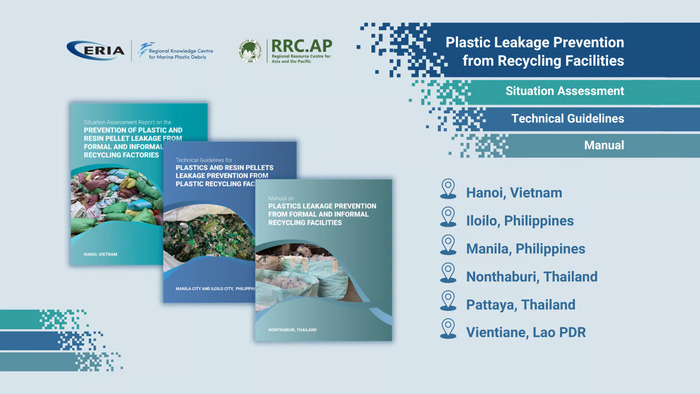
The Capacity Building Programme for Reducing Recycling-Related Marine Plastic Pollution in ASEAN Cities (CaRMPAC Project) will be officially launched on 16 August 2024 in Vientiane, Lao PDR. This significant regional initiative is designed to address the pressing issue of marine plastic pollution through targeted capacity building and implementation strategies. In conjunction with the launch, the outcomes of Phase 1 of the project have been published, including the Situation Assessment Reports and Technical Guidelines for six key ASEAN cities, which aimed at preventing plastic and resin pellet leakage from recycling facilities.
The Capacity Building Programme for Reducing Recycling-Related Marine Plastic Pollution in ASEAN Cities (CaRMPAC Project) will be officially launched on 16 August 2024 in Vientiane, Lao PDR. This significant regional initiative is designed to address the pressing issue of marine plastic pollution through targeted capacity building and implementation strategies. In conjunction with the launch, the outcomes of Phase 1 of the project have been published, including the Situation Assessment Reports and Technical Guidelines for six key ASEAN cities, which aimed at preventing plastic and resin pellet leakage from recycling facilities.
Publication of Situation Assessment and Technical Guidelines
Phase 1 of the CaRMPAC Project focused on a comprehensive situation assessment and the development of technical guidelines, which aimed at preventing plastic and resin pellet leakage from recycling facilities. This phase covered six key ASEAN cities: Pattaya, Nonthaburi, Hanoi, Iloilo, Manila, and Vientiane. The situation assessment revealed critical factors contributing to plastic leakage. That resulted in the creation of technical guidelines and manuals tailored to each city to improve recycling process and practices to prevent plastic leakage across both formal and informal sectors. The outcomes of Phase 1, including the Situation Assessment Reports and Technical Guidelines, have been published and are available for free access here.
Launching Phase 2: Capacity Building Programme
Following the successful completion of Phase 1, Phase 2 of the CaRMPAC Project aims to expand its reach to additional cities and countries, including Phnom Penh, Ho Chi Minh City, Bandung, Davao City, and others. Over the next 24 months, this phase will address the capacity gaps identified in Phase 1, with a particular focus on informal plastic recyclers and relevant city government regulators. The objective is to promote responsible recycling practices and sustainable plastic management through enhanced training, increased awareness, and improved regulatory support.
The CaRMPAC Project is being implemented by the Asian Institute of Technology’s Regional Resource Centre for Asia and the Pacific, with support from the Regional Knowledge Centre for Marine Plastic Debris of ERIA and the ASEAN Secretariat.
About RKCMPD
The Regional Knowledge Centre for Marine Plastic Debris (RKC-MPD) was established under the Economic Research Institute for ASEAN and East Asia (ERIA) in 2019. The Knowledge Centre’s mission is to provide information and support to ASEAN+3 Member States, thereby helping them to improve the circularity of plastic and prevent leakage into marine environments.
This Press Release has also been published on VRITIMES