Editor Team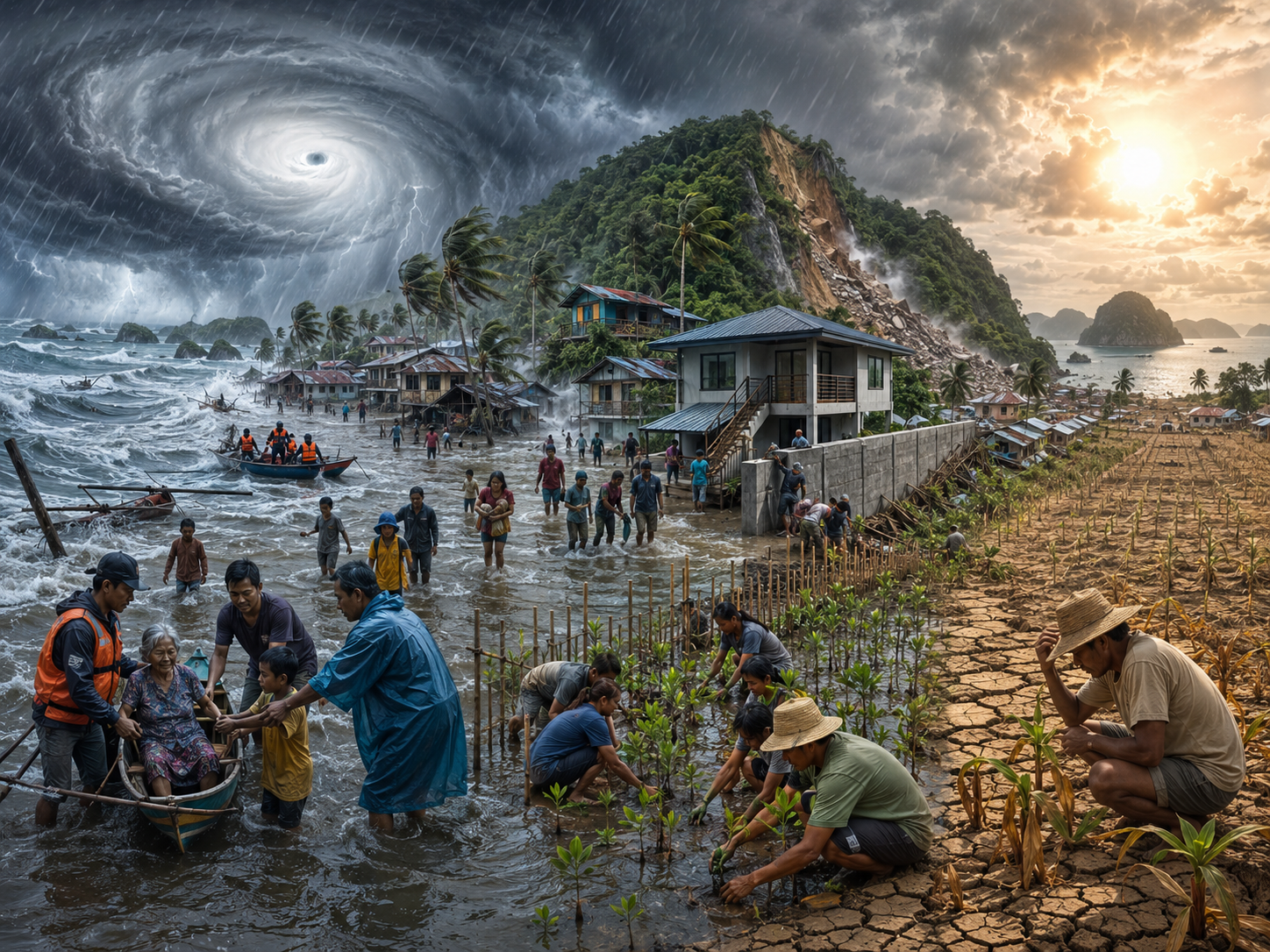
Climate change poses significant challenges for the Philippines, a country situated along the Pacific typhoon corridor and the Ring of Fire. With its numerous islands and extensive coastlines, the nation is highly susceptible to natural hazards such as typhoons, flooding, landslides, and coastal erosion. Scientific studies suggest that global warming is intensifying these hazards, leading to more frequent and severe disasters that affect both human populations and the economy.
Typhoons, locally known as bagyo, are a recurring hazard that affects millions each year. Around 20 tropical storms enter Philippine waters annually, and climate change has contributed to stronger winds and heavier rainfall, resulting in widespread flooding and landslides. Coastal towns and river communities face repeated damage, leading to the destruction of homes, infrastructure, and livelihoods. Storm surges are particularly dangerous in low-lying areas, compounding the impact of each typhoon.
Rising sea levels and coastal degradation exacerbate the vulnerability of the country. Natural barriers such as mangroves and coral reefs, which protect communities from storm surges, are being depleted, increasing the risk of flooding. Agriculture also suffers as changing rainfall patterns and prolonged droughts reduce crop yields, affecting millions of smallholder farmers. Food security and rural incomes are threatened, highlighting the interconnectedness of environmental, economic, and social systems.
The government has implemented several measures to reduce disaster risks. The National Disaster Risk Reduction and Management Council (NDRRMC) manages early warning systems, evacuation procedures, and relief operations. Infrastructure projects focus on building flood defenses, reinforced homes, and climate-resilient public facilities. Local governments promote community-based preparedness, encouraging residents to participate in drills, hazard mapping, and environmental protection activities.
Community initiatives are critical in building long-term resilience. Programs such as mangrove restoration, watershed rehabilitation, and sustainable farming empower citizens to reduce disaster impacts. Non-governmental organizations support these efforts by providing technical expertise, emergency supplies, and training in risk assessment. Education campaigns help individuals and communities understand climate risks and prepare accordingly.
International support strengthens the Philippines’ adaptation strategies. Foreign aid, technology transfer, and knowledge-sharing initiatives allow the country to adopt climate-smart infrastructure, renewable energy projects, and advanced disaster management systems. Partnerships with global institutions help improve early warning capabilities, response efficiency, and long-term resilience planning.
Successfully confronting climate-related threats requires a holistic approach that combines government leadership, community action, and global collaboration. By integrating environmental protection, disaster preparedness, and sustainable development, the Philippines can better manage natural disaster risks and protect its population, economy, and ecosystems from the escalating impacts of climate change.