vritimes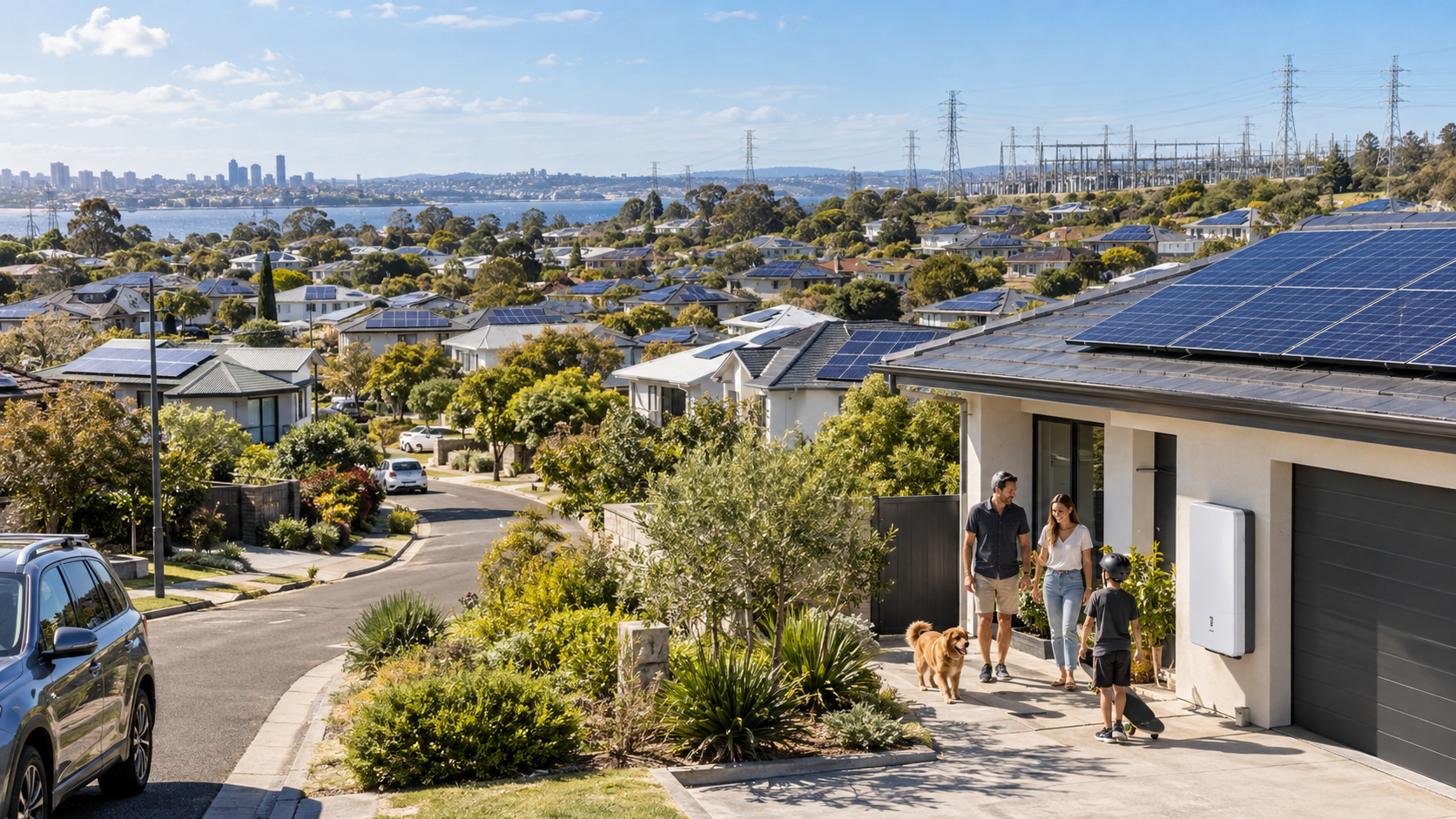
Australia’s clean energy transition has entered a phase that even the most optimistic analysts did not anticipate. In the June quarter of 2026, the country installed a staggering 1 gigawatt of rooftop solar in just three months—the first time any nation has crossed that threshold in a single quarter. The previous record of 942 megawatts, set in late 2023, now looks like a modest milestone from a different era.
What makes this surge particularly remarkable is its grassroots character. This is not a story of government mandates or utility-scale megaprojects alone. It is a story of hundreds of thousands of Australian households making individual decisions that collectively reshape the national energy landscape. According to the Clean Energy Regulator, more than 500,000 battery applications have been received since the Cheaper Home Batteries Program launched, representing over 11.4 gigawatt-hours of usable storage capacity across the country. The latest quarterly data from the regulator, available at https://www.cleanenergyregulator.gov.au/, confirms that household demand continues to exceed expectations.
The relationship between rooftop solar and home batteries has become the defining dynamic of Australia’s distributed energy revolution. More than 80 percent of small-scale solar installations in April 2026 were installed alongside a battery, a clear signal that households are no longer content to simply generate power during the day—they want to store it for when the sun goes down. Carl Binning, Acting Chair of the Clean Energy Regulator, captured the significance of this shift when he noted that the scale of household demand demonstrates what happens when “the economics stack up”. Falling battery costs, combined with government rebates and rising retail electricity prices, have created a perfect storm of consumer adoption.
The numbers tell the story with striking clarity. Small-scale battery installations reached a record high in the June quarter, with more than 111,000 batteries approved and 3.6 gigawatt-hours of capacity installed. Total installed battery capacity across Australia now exceeds 7.4 gigawatt-hours in just nine months of the program. These are not isolated installations. They are part of a coordinated, consumer-led movement that is changing how electricity is generated, stored, and consumed.
The implications of this distributed energy boom extend far beyond individual household savings. When aggregated, millions of rooftop solar systems and home batteries function as a virtual power plant capable of providing grid stability services traditionally delivered by coal-fired generators. Renewable generation accounted for approximately 42 percent of National Electricity Market generation in the June quarter of 2026, up from 37 percent in the same period the previous year. The Australian Energy Market Operator has acknowledged that the “unexpected boom in home batteries” has made the national target of 82 percent renewables by 2030 “very much within reach,” a goal that many industry observers had dismissed as unachievable just two years earlier.
The Clean Energy Regulator’s data reveals another dimension of this transformation: the expansion of the Small-scale Renewable Energy Scheme to systems up to 1 megawatt, expected from October 2026, could unlock a new wave of mid-scale solar adoption among businesses, farmers, and community organisations. This policy adjustment recognises that the distributed energy revolution is not confined to residential rooftops. It is spreading across the economy, from small businesses installing solar to reduce operating costs to farmers using renewable energy to power irrigation and processing.
While the trajectory is undeniably positive, challenges remain. The regulator has cautioned that “much work remains to be done,” particularly in maintaining momentum in low-carbon industrial processes and addressing social licence issues affecting wind generation investment. The distributed energy story also raises questions about grid management, equity, and the role of households in the energy system. As more Australians become both consumers and producers of electricity, the traditional utility business model faces existential pressure. The speed of this transition—driven by consumer choice as much as policy—suggests that Australia’s energy future will be shaped as much from the bottom up as from the top down.

 Editor Team