vritimes
A Regulation That Saves Exports
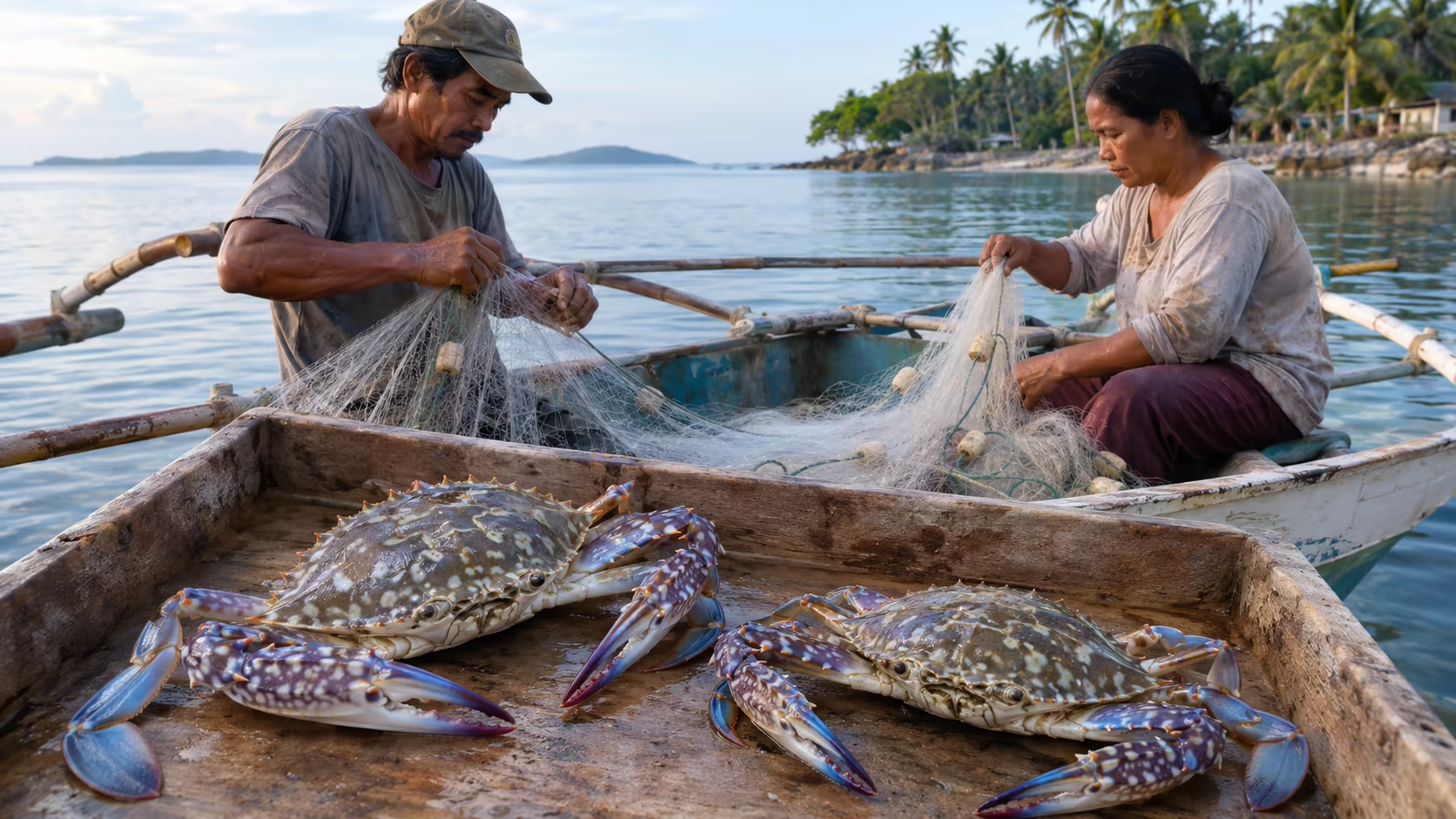
In July 2026, the Department of Agriculture (DA), through the Bureau of Fisheries and Aquatic Resources (BFAR), issued Fisheries Administrative Order (FAO) No. 277, a regulation specifically governing the blue crab (alimasag) fishery. The most prominent provision is a limit on the total length of gillnets used in fishing operations to a maximum of 500 meters.
Studies cited by the DA show that this limit significantly reduces incidental catches of marine mammals and other protected species, without sacrificing fishing efficiency. For fishers accustomed to long nets, the rule requires operational adjustments. But the economic consequence is far greater if the Philippines fails to meet US standards.
Why America Is the Stake
The United States is the main market for Philippine blue crab. FAO 277 is explicitly described as an effort to align Philippine fisheries with the requirements of the US Marine Mammal Protection Act. This means compliance is not just about the environment—it is a condition for market entry. “Sustainability is no longer just an environmental goal. It is a business necessity,” said Agriculture Secretary Francisco P. Tiu Laurel Jr. in an official DA release.
The blue crab industry supports thousands of fishers, processors, and exporters. Undersecretary for Fisheries Drusila Bayate called the regulation “a critical step to restore our access to the US.” In other words, conservation and trade move in the same direction, not in opposition.
Enforcement and Community Participation
FAO 277 does not only regulate fishing gear. The regulation also strengthens enforcement by BFAR together with local governments and fisheries law enforcement agencies, imposes administrative sanctions on violators, and mandates a review every three years. This approach reflects a shift from top-down regulation toward collaborative governance involving fishers, processors, scientists, and conservation organizations in its formulation.


 Editor Team