Editor Team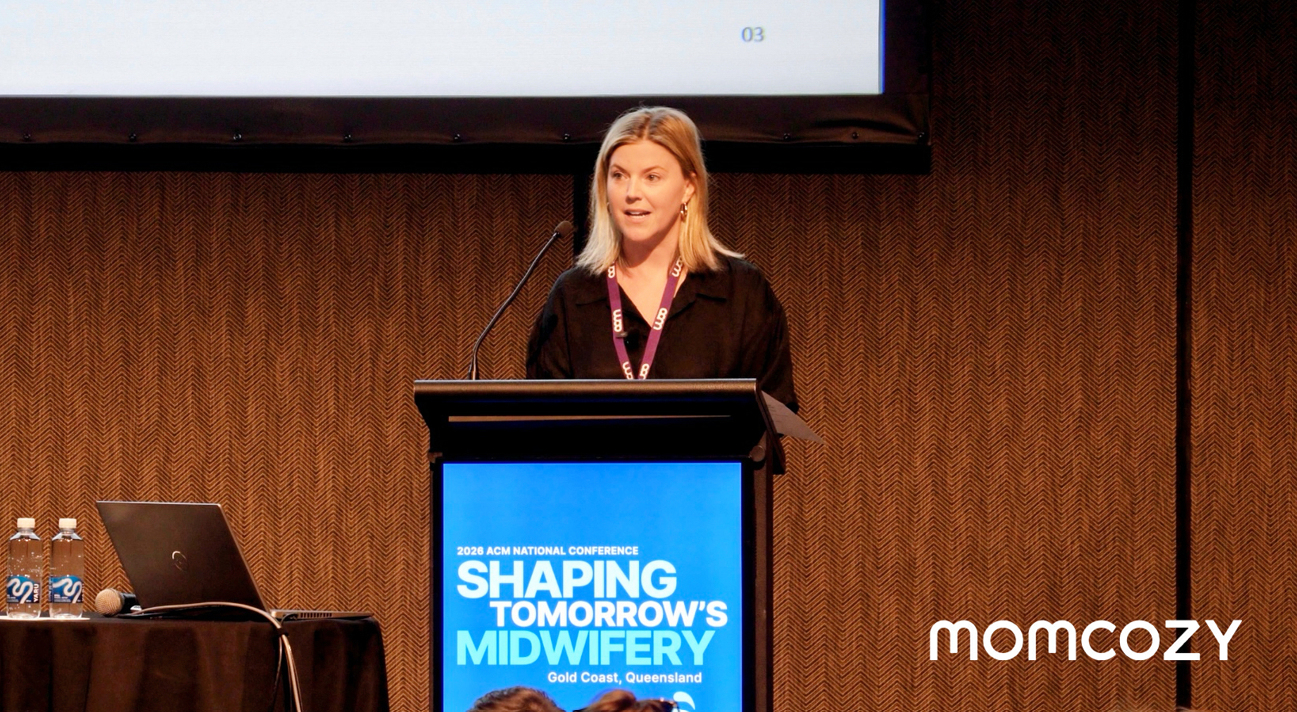
At the Australian College of Midwives National Conference, registered midwife and infant sleep consultant Bianca Burge, in collaboration with Momcozy, is calling for a shift in the breastfeeding conversation, from asking why mothers stop to examining how care, workplaces and practical product design can make continuing more achievable.
When a mother stops breastfeeding earlier than planned, one of the first questions is often: why?
But registered midwife and infant sleep consultant Bianca Burge believes that may be the wrong place to start.
At the Australian College of Midwives (ACM) National Conference, which brings together midwives and maternal-health professionals from across Australia, Burge is encouraging healthcare professionals to reconsider how breastfeeding continuation is discussed.
The distinction may seem small, but it changes where responsibility sits.
Asking, “Why aren’t mothers breastfeeding for longer?” can quietly suggest that continuation depends primarily on a mother’s motivation or choices. Asking what stood in her way opens a broader conversation about whether healthcare, workplaces, family support and practical solutions are helping reduce the barriers she faces.
When Intention and Outcome Tell Different Stories
Australian breastfeeding figures reveal an important gap between starting and continuing.
More than 90% of Australian children have received breastmilk, according to Australian Bureau of Statistics data cited in Burge’s presentation. However, approximately 37.5% are exclusively breastfed for around six months, while about 43% are still receiving breastmilk at 12 months.
For Burge, these figures should not simply be interpreted as mothers choosing to stop.
“Behind every statistic is a mother,” she said in her conference remarks.
A mother may intend to breastfeed for six months, 12 months or longer, only to find that time, work, comfort and family responsibilities make continuing increasingly difficult.
Returning to work can introduce new demands. Finding enough time and privacy to express can become challenging. Caring for other children or managing changing family routines can leave less room for feeding or expressing.
The intention may remain, even when the circumstances around it have changed.
This distinction matters because breastfeeding continuation is not only a question of motivation or education. It is also shaped by whether healthcare, workplaces and practical solutions help reduce the barriers mothers face.
Moving Beyond ‘Why Did She Stop?’
Burge’s argument shifts attention away from the moment breastfeeding ends and towards what happened before it.
A mother may return to work earlier than expected or struggle to find enough time and privacy to express. Her confidence may change, family responsibilities may increase, or the support available to her may no longer match the challenges she is facing.
None of these necessarily means her desire to breastfeed has disappeared.
Research cited in Burge’s presentation found that 58% of mothers who returned to work before six months said the transition influenced them to reduce or stop breastfeeding. Mothers with greater workplace flexibility and opportunities to breastfeed or express were more likely to continue.
The implication is significant: supporting breastfeeding continuation requires more than telling mothers what to do or encouraging them to try harder.
Healthcare professionals provide essential education, clinical care, reassurance and individualised guidance. But practical support also matters. When mothers are balancing work, childcare, family responsibilities and their own wellbeing, even small sources of everyday friction can influence how sustainable expressing feels.
This creates a broader opportunity to consider how the systems and products surrounding mothers can support the goals they already have.
Rethinking What Breastfeeding Success Means
This shift raises a broader question: how should breastfeeding success be defined?
For Burge, woman-centred care means moving away from the assumption that every mother should follow one ideal breastfeeding journey.
Every mother has different goals. Every family has different circumstances, and every workplace presents different realities.
Instead of searching for a “perfect” plan, Burge encourages healthcare professionals to help each mother find an approach that considers both what she hopes to achieve and what is realistically possible within her life.
“What does this mother need to achieve the breastfeeding journey she hopes for?” Burge asked.
This approach does not diminish the importance of breastfeeding education, professional recommendations or evidence-based clinical care. Instead, it encourages healthcare professionals to understand the woman behind each outcome, and the circumstances that may make continuing easier or harder.
It also creates a role for practical innovation: if real-life barriers can make breastfeeding or expressing harder, thoughtful product design can help reduce some of that everyday friction.
From Identifying Barriers to Designing Around Them
For Momcozy, which collaborated with Burge on her ACM presentation, understanding breastfeeding barriers also has a practical design dimension.
Time, mobility, comfort and confidence can all shape whether expressing feels sustainable, particularly when mothers return to work, care for other children or manage changing family routines. Momcozy’s approach is to translate these real maternal-care challenges into practical, thoughtfully designed solutions. Rather than asking mothers to organise their lives around a device, the aim is to design products that fit more naturally into the realities of their lives.
The Momcozy Wellness 1 Warm-Massage Wearable Breast Pump is one example of this philosophy. It brings controlled warmth, rhythmic vibration and wearable pumping together in one system, with adjustable pumping options, top-view alignment and a hands-free design. These features are intended to support a more comfortable, controlled and flexible expressing routine, particularly as mothers navigate work, childcare and changing family routines.
The Wellness 1 is a practical support option that does not replace breastfeeding education, midwifery care or lactation support, and it should not be understood as guaranteeing a particular clinical or feeding outcome.
“It’s not about replacing breastfeeding. It’s not about replacing support,” Burge said in her conference remarks. “It’s about providing mothers with another tool that helps them continue doing something they already wanted to do.”
For Momcozy, this is the broader role of human-centred product design in maternal care: recognising the everyday challenges mothers face and translating those challenges into thoughtful, practical solutions, while recognising the essential role of midwives and other healthcare professionals in providing informed, individualised care.
The better question may not simply be, “Why did she stop?”
It may be: “What combination of care, confidence and practical support could have made continuing possible for her?”
References
About Bianca Burge
Bianca Burge is an experienced registered midwife and certified infant sleep consultant, and the founder of Plan B Sleep Consulting. She provides tailored, evidence-informed infant and toddler sleep support grounded in clinical experience and a nurturing, family-centred approach.
Continue the Conversation with Bianca
For tailored, evidence-informed infant and toddler sleep support, connect with Bianca Burge through Plan B Sleep Consulting and follow her latest guidance for families online.
Website: Plan B Sleep Consulting
Instagram: @planbsleepconsulting
This press release has also been published on VRITIMES