vritimes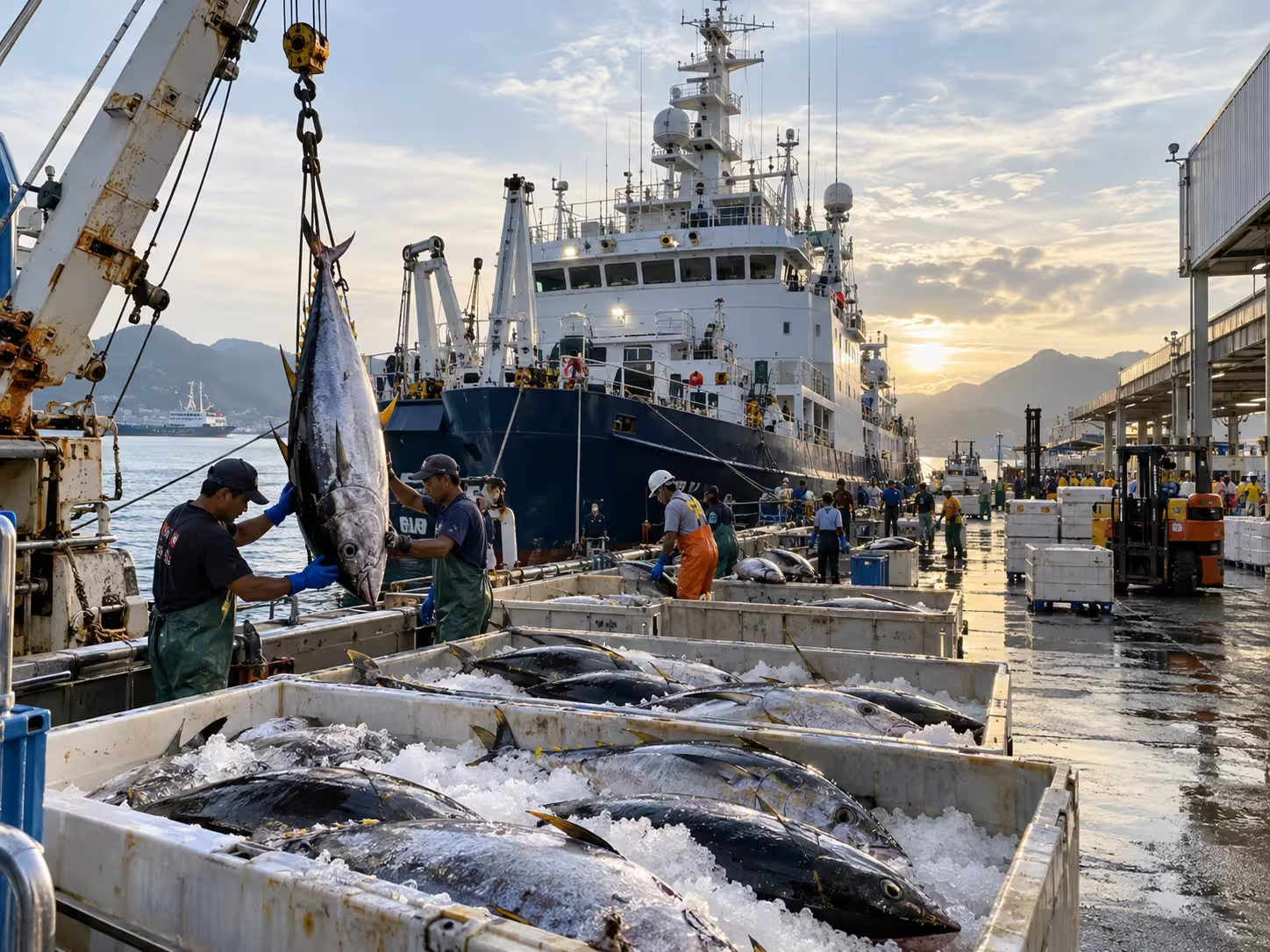
The Strategic Pivot Toward Oceanic Fisheries
Malaysia’s deep-sea fishing industry stands at a critical inflection point. For decades, the nation’s fisheries sector has been dominated by coastal and inshore operations, but a confluence of policy ambition, technological readiness, and unexploited maritime resources is now driving an unprecedented push into oceanic waters. The government’s decision to channel RM100 million through the Fisheries Development Authority under the 13th Malaysia Plan (RMK13) for the 2026–2030 period signals a definitive commitment to repositioning deep-sea fishing as a cornerstone of national maritime economic strategy.
This financing scheme specifically targets Zone C2 deep-sea vessel licence holders and Zone C3 tuna vessel operators, enabling them to acquire new vessels or upgrade existing fleets through mechanisation and automation. The objective extends beyond mere fleet expansion—it encompasses improving productivity, enhancing catch quality at landing points, and building a sustainable pipeline of skilled maritime professionals.
The Tuna Industry as a Strategic Growth Engine
At the heart of this maritime push lies the tuna sector. The Tuna Industry Development Strategic Plan 2021–2030 sets an ambitious target: landing 50,000 metric tonnes of oceanic tuna annually, generating an estimated economic value of RM1.8 billion, and creating over 1,000 new employment opportunities. As of October 2026, 36 Zone C3 high-capacity vessels have been licensed, with the Department of Fisheries targeting 70 such vessels operating in the Indian Ocean by 2030.
The economic trajectory is already visible. In 2025, Malaysia landed 97,240 metric tonnes of tuna and tuna-like species valued at RM980 million, while the 2026 KPI has been set at 92,000 metric tonnes with a longer-term target of 150,000 metric tonnes by 2030. The launch of the Kha Yang 666, a 78.72-metre tuna carrier with a gross tonnage of 1,887 tonnes and a 1,700-tonne cargo capacity, represents a tangible manifestation of this ambition. Homeported at Penang Port, this vessel is expected to catalyse Penang’s emergence as a regional maritime, fisheries, and logistics hub while generating skilled employment for local communities.
Sabah’s Emergence as a Deep-Sea Powerhouse
Sabah occupies a unique position in this maritime narrative. With projections of 1,000 vessels operating annually, each averaging 50 tonnes of catch, the state anticipates landing 50,000 tonnes of tuna per year—a volume that could generate up to RM1.8 billion in economic value. This potential is underpinned by Sabah’s strategic location adjacent to the Sulawesi Sea and the South China Sea, both recognised as productive tuna fishing grounds. The federal government’s allocation of RM17 million under RMK13 specifically for tuna industry development in these waters further underscores the state’s centrality to national deep-sea fishing ambitions.
The enabling policy framework has been progressively strengthened. Fisheries licensing authority for deep-sea operations was devolved to the Sabah state government on 4 December 2021, alongside the rezoning of fishing areas and the development of maritime TVET programmes to build local human capital.
Infrastructure and Downstream Integration
The development of supporting infrastructure remains critical to realising these targets. Discussions at the highest levels of government have centred on constructing dedicated fish landing complexes in Hutan Melintang, Perak, and Sandakan, Sabah—facilities designed to accommodate the increased volumes and quality requirements of oceanic tuna landings.
Malaysia’s potential to become a regional tuna transhipment hub is reinforced by the global tuna industry’s estimated annual value of USD42 billion, projected to grow to USD54 billion by 2032. Capturing even a modest share of this market through transhipment and value-added processing would represent a transformative economic opportunity. The convergence of financing mechanisms, fleet modernisation, infrastructure development, and human capital investment positions Malaysia’s deep-sea tuna industry not merely as a fisheries initiative, but as a comprehensive maritime economic strategy with far-reaching implications for coastal communities, trade balances, and regional geopolitical positioning.


 Editor Team