Editor Team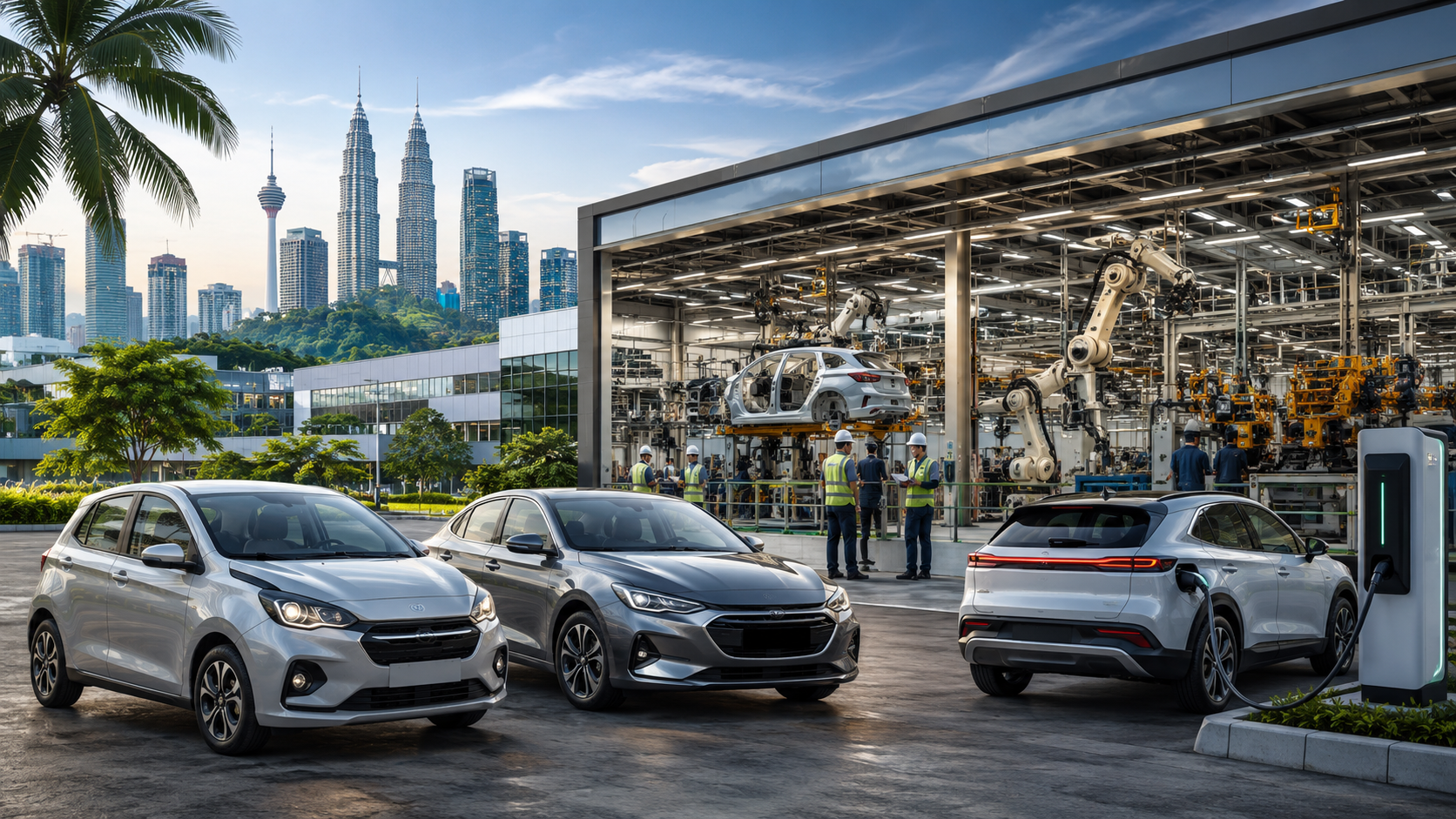
Malaysia has developed one of Southeast Asia’s most established automotive ecosystems, supported by decades of national vehicle manufacturing, foreign investment, and continuous technological transformation. From the early establishment of Proton as Malaysia’s first national car manufacturer to Perodua becoming the country’s largest vehicle producer, the automotive sector has become a strategic pillar of Malaysia’s industrial development.
Today, Malaysia’s automotive industry is entering a new phase where traditional manufacturing strength is being combined with modern mobility trends, including electric vehicles (EVs), connected cars, smart manufacturing systems, and digital automotive services.
According to the Malaysian Automotive Association (MAA), Malaysia’s total industry volume (TIV) has remained one of the strongest in the region, reflecting continued consumer demand and the resilience of the domestic vehicle market. Official industry updates are available through MAA:
https://www.maa.org.my/
The Foundation of Malaysia’s National Automotive Manufacturing Sector
Malaysia’s automotive journey began with the ambition to create a domestic manufacturing capability rather than depending entirely on imported vehicles. The establishment of Proton in 1983 marked a significant milestone, allowing Malaysia to develop local engineering expertise, manufacturing facilities, and automotive supply chains.
Over the years, Proton expanded from producing locally designed passenger cars into a globally connected automotive company through strategic partnerships, including collaboration with China-based Geely. This transformation has allowed Proton to introduce more competitive models featuring advanced safety systems, improved design, and modern digital technology.
Meanwhile, Perodua has strengthened its position as Malaysia’s leading automotive manufacturer by focusing on affordable, fuel-efficient vehicles designed for local consumers. Models such as the Perodua Myvi, Axia, and Bezza have become highly popular due to their reliability, competitive pricing, and lower ownership costs.
The success of both national manufacturers demonstrates how Malaysia has created a unique automotive identity within ASEAN, balancing domestic brands with international automotive players.
Malaysia’s Automotive Supply Chain and Manufacturing Advantage
One of Malaysia’s strongest automotive advantages is its well-developed supplier ecosystem. The country has thousands of automotive-related companies involved in component manufacturing, including metal parts, electronics, plastics, safety systems, and vehicle assemblies.
This industrial network has helped Malaysia attract global automotive companies seeking production capabilities in Southeast Asia. International brands including Toyota, Honda, Mercedes-Benz, BMW, and other manufacturers have established operations in Malaysia, contributing to technology transfer and workforce development.
The automotive sector also supports thousands of skilled jobs, ranging from engineering and production management to research and development activities.
The growth of advanced manufacturing technologies, including automation and Industry 4.0 systems, is further improving efficiency in Malaysian automotive plants. Manufacturers are increasingly adopting robotics, artificial intelligence-based quality control, and digital production monitoring to compete with regional automotive hubs such as Thailand and Indonesia.
The Shift Toward Modern Vehicles and New Automotive Technologies
The Malaysian automotive industry is currently experiencing a major transition as consumer preferences move beyond conventional internal combustion engine vehicles.
Modern Malaysian consumers are increasingly interested in vehicles equipped with advanced features such as:
- Advanced Driver Assistance Systems (ADAS)
- Digital infotainment platforms
- Smartphone connectivity
- Improved fuel efficiency
- Hybrid and electric powertrains
This shift has encouraged local manufacturers to accelerate their technology development. Proton and Perodua are exploring electrification strategies, while international EV brands are expanding their presence in Malaysia.
The government’s New Industrial Master Plan 2030 (NIMP 2030) also highlights the importance of developing high-value industries, including automotive technology and electric mobility. The policy aims to strengthen Malaysia’s manufacturing competitiveness while encouraging innovation-driven industries.
Official information regarding Malaysia’s industrial development strategy can be accessed through the Ministry of Investment, Trade and Industry (MITI):
https://www.miti.gov.my/
Malaysia’s Position in the Competitive ASEAN Automotive Landscape
Malaysia’s automotive industry faces increasing competition from regional markets, particularly Thailand and Indonesia, which have become major production centers for global automotive brands.
However, Malaysia maintains several advantages, including strong engineering capabilities, a mature supplier network, political commitment toward industrial development, and established national automotive brands.
The combination of local manufacturing expertise and new technology adoption creates opportunities for Malaysia to become a stronger automotive innovation hub in Southeast Asia.
The future success of Malaysia’s automotive sector will depend on how effectively manufacturers adapt to electrification, digital transformation, and changing consumer expectations.