Editor Team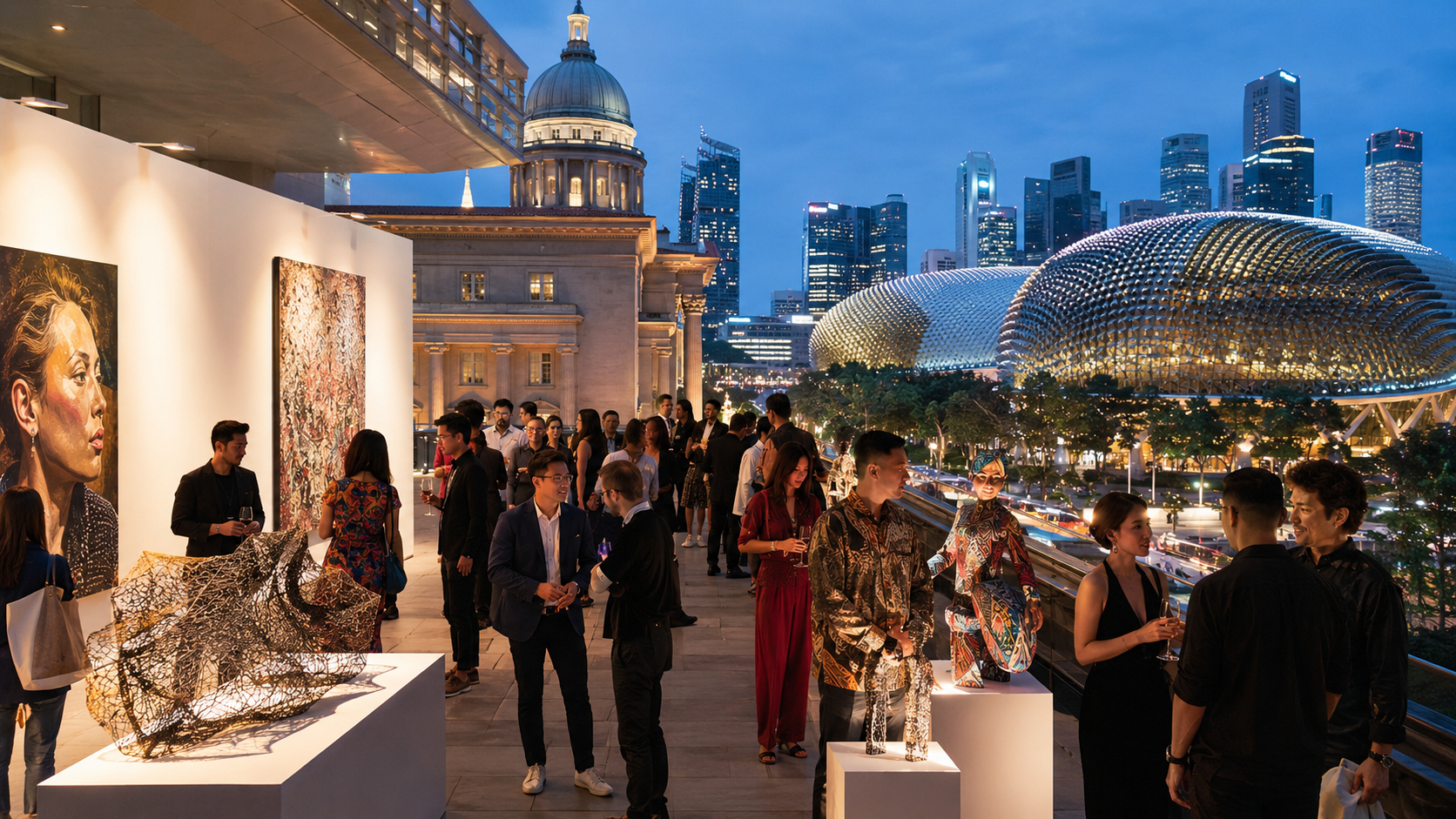
How Singapore Became Southeast Asia’s Leading Art Hub Through Policy, Global Fairs and Cultural Infrastructure
Singapore’s reputation as a financial and technology centre is well established, but its rise as a major cultural destination has become equally significant. Over the past two decades, the city-state has developed an arts ecosystem that connects museums, independent creators, commercial galleries, collectors, international fairs and government-backed programmes.
The result is a creative landscape that is unusually dense for a country of its size.
Singapore’s advantage does not come from having the largest domestic art market in Asia. Instead, its strength lies in connectivity. The city provides a meeting point where Southeast Asian artists can engage with collectors from East Asia, Europe and the Middle East while global institutions gain access to one of the world’s most culturally diverse regions.
Cultural Infrastructure Built for Regional Influence
Singapore’s transformation into an arts centre is visible in its institutions. National Gallery Singapore has become a major platform for modern art from Singapore and Southeast Asia, while the Singapore Art Museum has played an important role in presenting contemporary practices from the region.
Esplanade – Theatres on the Bay extends this cultural infrastructure beyond visual art. Its programming in theatre, dance and music demonstrates that Singapore’s creative strategy is not built around a single artistic discipline.
Gillman Barracks has also contributed to the ecosystem by bringing galleries and arts organisations into a former military site. Although Singapore’s gallery sector has experienced the same commercial pressures affecting art markets worldwide, the cluster remains an important example of how urban space can be used to encourage cultural exchange.
Public Policy as a Creative Engine
Government participation is one of the most distinctive features of Singapore’s arts development.
The National Arts Council supports artists, organisations, education and audience development. Its broader policy direction, including the ongoing Our SG Arts Plan 2023–2027, reflects an effort to make culture more accessible while strengthening opportunities for creative professionals.
Official information on programmes and national arts priorities is available through the National Arts Council at https://www.nac.gov.sg/.
This institutional support gives Singapore an advantage that many emerging art centres lack: long-term planning. At the same time, the model creates an ongoing debate about how publicly supported culture can remain experimental, independent and open to difficult ideas.
That tension is not unique to Singapore, but it is particularly important in a city where the state plays such a visible role in cultural development.
ART SG and Singapore Art Week Expand the Global Network
The arrival of ART SG added another international layer to the city’s art market. By attracting galleries, collectors and art professionals from multiple continents, the fair strengthened Singapore’s role as a commercial gateway to Southeast Asia.
Its impact becomes more significant when viewed alongside Singapore Art Week, when museums, galleries, public spaces and independent initiatives activate the city at the same time.
This concentration creates a network effect. A collector may visit an international fair, discover a Southeast Asian artist in a gallery, attend a museum exhibition and encounter an experimental project within a few days.
Why Singapore’s Art Model Matters
Singapore shows that cultural influence does not depend entirely on population size or a centuries-old art market. Strategic infrastructure, regional positioning and consistent investment can turn a compact city into an international meeting point.
The most compelling question now is not whether Singapore belongs on Asia’s cultural map. It is how the city can continue expanding its global influence while giving artists enough space to take risks, challenge audiences and develop work beyond commercial expectations.