Editor Team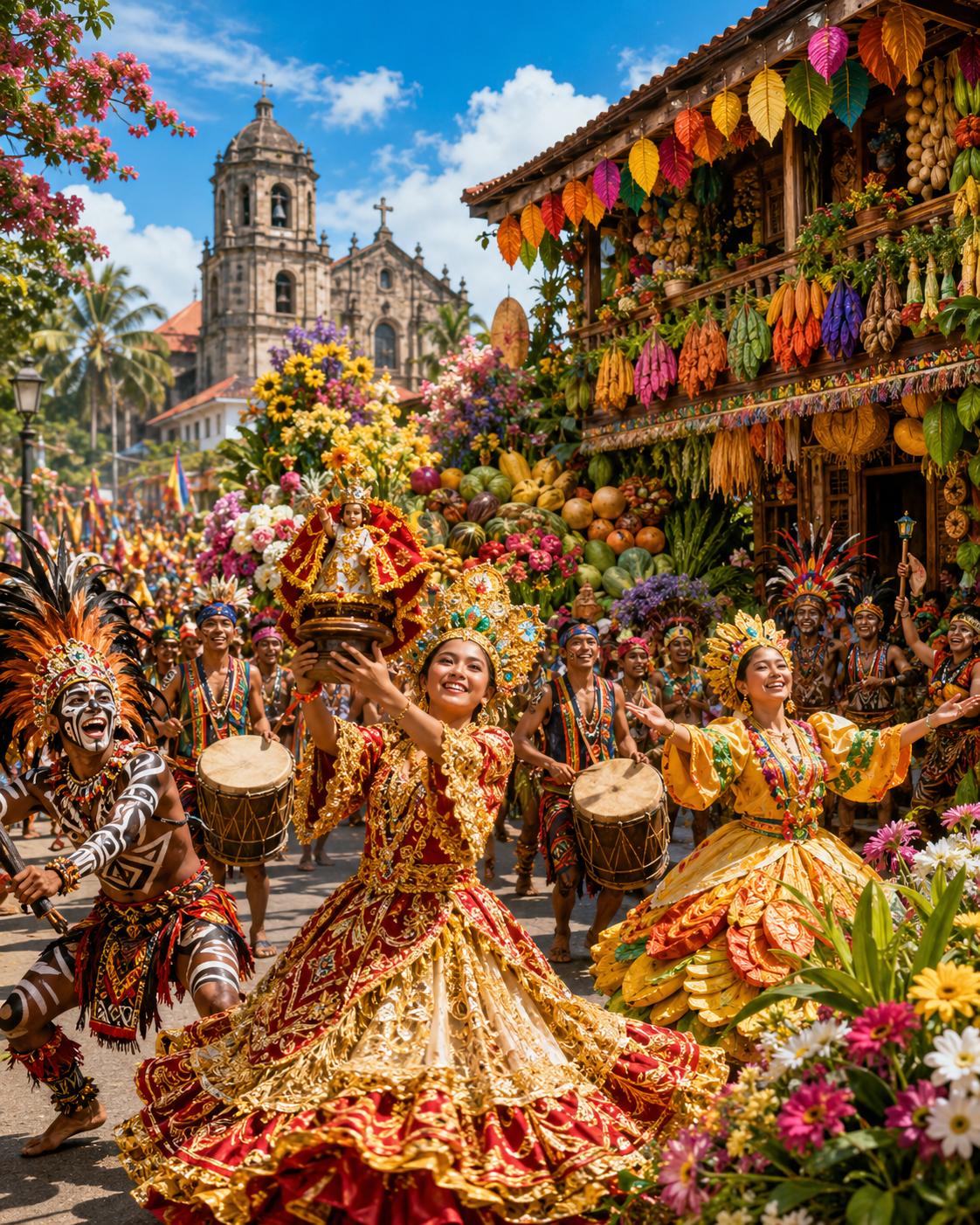
The Philippines is a nation where celebration is part of everyday life. Its festivals and traditions are more than tourist attractions; they are powerful expressions of identity, memory, and community. Each celebration reflects a combination of influences, including indigenous customs, Spanish-era Christianity, Asian trade, Islamic traditions, and regional creativity. This mixture has produced a cultural landscape that is lively, diverse, and deeply meaningful.
One of the most noticeable aspects of Filipino festivals is their strong connection to faith. In many towns, the annual fiesta is dedicated to a patron saint. Families prepare food, churches hold special masses, and streets fill with music and dancing. Sinulog Festival in Cebu is one of the best examples. Celebrated every January, it honors the Santo Niño and features dancers moving to a repeated two-step rhythm. The performance represents devotion, history, and the continuing importance of faith in Cebuano life.
Ati-Atihan Festival in Aklan is another major celebration with religious and cultural significance. Participants paint their skin dark, wear indigenous-inspired clothing, and dance to the beat of drums. The event honors the Santo Niño while also acknowledging the Ati people, whose presence is part of the country’s early history. Dinagyang Festival in Iloilo has a similar devotional theme, but it is known for highly organized dance groups, dramatic choreography, and competitive street performances.
Some Philippine festivals are linked to farming, harvest, and thanksgiving. Pahiyas Festival in Lucban, Quezon, transforms houses into colorful displays of rice, fruits, vegetables, and kiping. Residents decorate their homes to express gratitude for agricultural blessings. The festival also promotes local products and shows how art can grow from everyday rural life. Kadayawan Festival in Davao celebrates abundance in a broader way. It honors flowers, fruits, the land, and the indigenous communities of the region. Through dances, costumes, and exhibits, Kadayawan presents Mindanao as a place of cultural richness and natural beauty.
Other festivals reveal the Filipino ability to turn hardship into hope. MassKara Festival in Bacolod is famous for smiling masks and lively performances. It was created during a difficult time when the city faced economic problems and tragedy. Instead of giving in to sadness, the community created a festival that symbolized optimism. Today, MassKara represents the strength and cheerfulness often associated with the Filipino spirit.
Traditions outside festival seasons are equally important. Filipinos are known for close family relationships, respect for elders, and hospitality toward guests. The practice of “pagmamano” shows respect, while “bayanihan” represents cooperation and mutual help. Food also plays a major role in cultural life. During fiestas, families often serve dishes such as lechon, pancit, adobo, rice cakes, and local delicacies.
Filipino festivals and traditions keep local culture alive. They allow communities to remember their history, honor their beliefs, thank nature, and strengthen social bonds. Through music, dance, food, prayer, and shared celebration, the Philippines continues to express a cultural identity that is colorful, resilient, and proudly local.