vritimes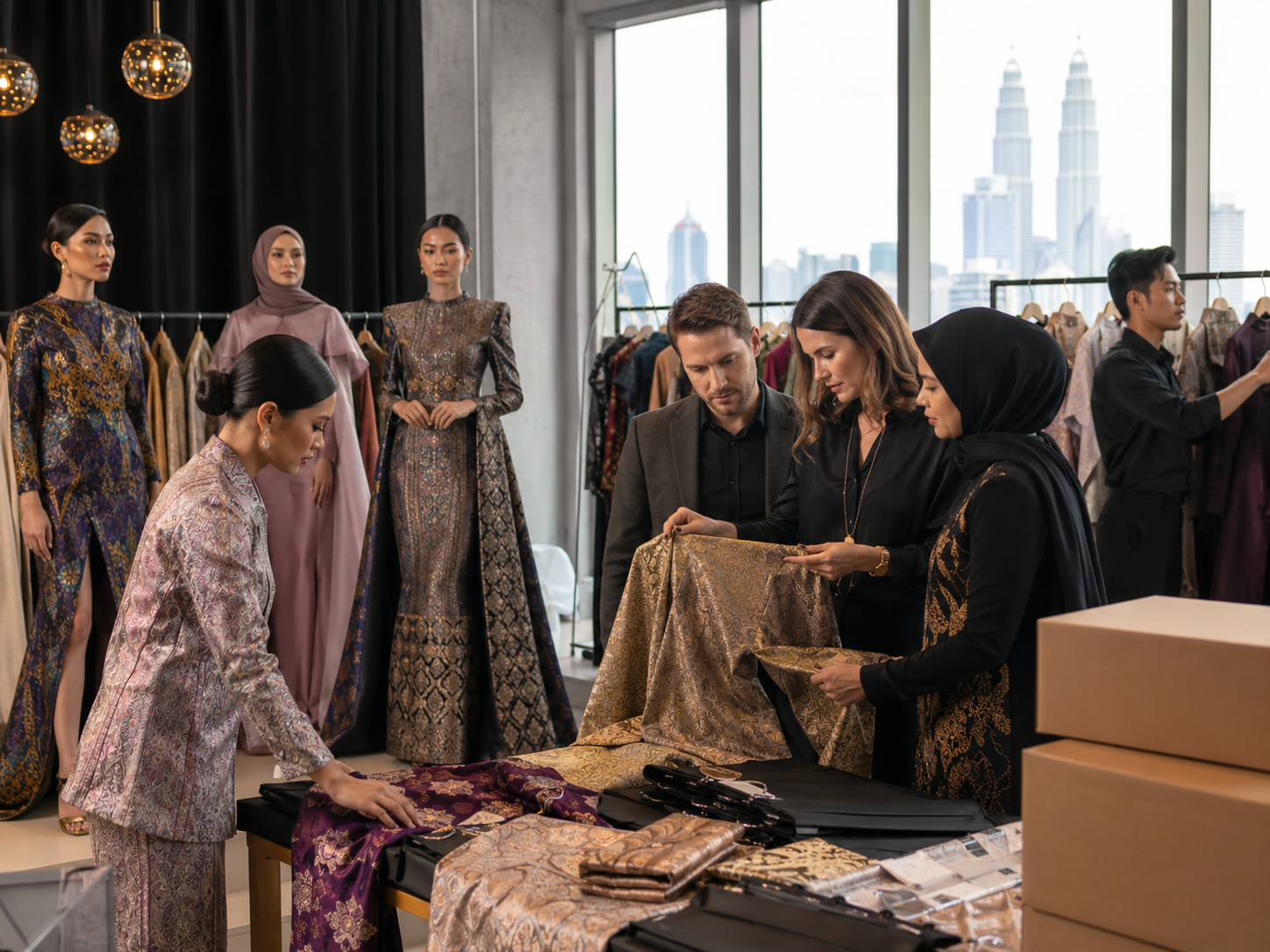
Kuala Lumpur’s fashion scene has moved far beyond its traditional batik stalls. Today, Malaysian designers are presenting collections in Dubai, London, and Jakarta, while local e-commerce platforms push their creations across borders. This evolution—from heritage craftsmanship to contemporary global brand building—is positioning Malaysia as a serious player in Southeast Asia’s fashion economy.
Heritage Meets High Fashion in Kuala Lumpur
Malaysian design houses are reinterpreting songket, batik, and tenun into structured evening gowns, tailored suits, and modest wear. Rizman Ruzaini, for example, has built a reputation for crystal-embellished couture that appeals to Middle Eastern royalty and regional celebrities. Jovian Mandagie focuses on modest luxury, combining flowing silhouettes with intricate local textiles. Khoon Hooi and Alia Bastamam have similarly carved niches in contemporary occasionwear and minimalist ready-to-wear. This blend of local identity and international silhouette is the core differentiator for Malaysian brands entering crowded global markets.
Local Labels Driving Export Growth
Several homegrown names are now export-oriented. Fiziwoo has found strong demand in the Middle East for its structured evening wear, while Innai Red and Nurita Harith cater to the modest bridal market in Singapore, Brunei, and Indonesia. Mimpikita’s wearable collections have entered regional department stores and online platforms. According to Malaysia’s official investment promotion agency, MIDA, the textile and apparel sector remains a priority for high-value manufacturing and design-driven exports. You can review MIDA’s industry overview here: https://www.mida.gov.my/industries/services/fashion-and-textile/. The agency highlights that Malaysian fashion brands are increasingly integrating digital design, sustainable sourcing, and regional branding to compete globally.
Digital Platforms and Government Support
Cross-border e-commerce has accelerated the global push. Zalora Malaysia, Shopee, and TikTok Shop enable designers to reach customers in Saudi Arabia, the UAE, and Europe without physical stores. FashionValet, once the darling of local modest fashion e-commerce, underwent a high-profile restructuring after Khazanah Nasional and PNB sold their stakes at a loss in late 2024. The episode underscored the need for financial discipline and transparent governance in fashion startups, but it also prompted new investment interest in profitable, niche local brands. MATRADE, Malaysia’s trade promotion agency, continues to offer market access grants, overseas trade missions, and virtual export coaching for fashion SMEs.
Modest Fashion Market Momentum
The global modest fashion economy is now estimated to exceed US$300 billion annually, driven by demand from Muslim-majority markets and growing modest wear adoption in Western cities. Malaysia, with its halal certification ecosystem and multicultural design language, is well positioned to capture a larger share. Designers are leveraging this by participating in Jakarta Fashion Week, Dubai Modest Fashion Week, and London Modest Fashion Week. Such exposure has moved Malaysian labels from local ateliers to international wholesale buyers and celebrity stylists.
Challenges on the Road to Global Scale
Expansion is not without hurdles. Local brands face rising production costs, limited access to premium fabrics, and intellectual property risks when designs are replicated overseas. Supply chain disruptions and currency fluctuations also affect margins. To address these, industry associations are pushing for more regional fabric sourcing, digital pattern libraries, and government-backed intellectual property registration. Meanwhile, young designers are adopting direct-to-consumer models to retain pricing control and build loyal global communities.

 Editor Team