Editor Team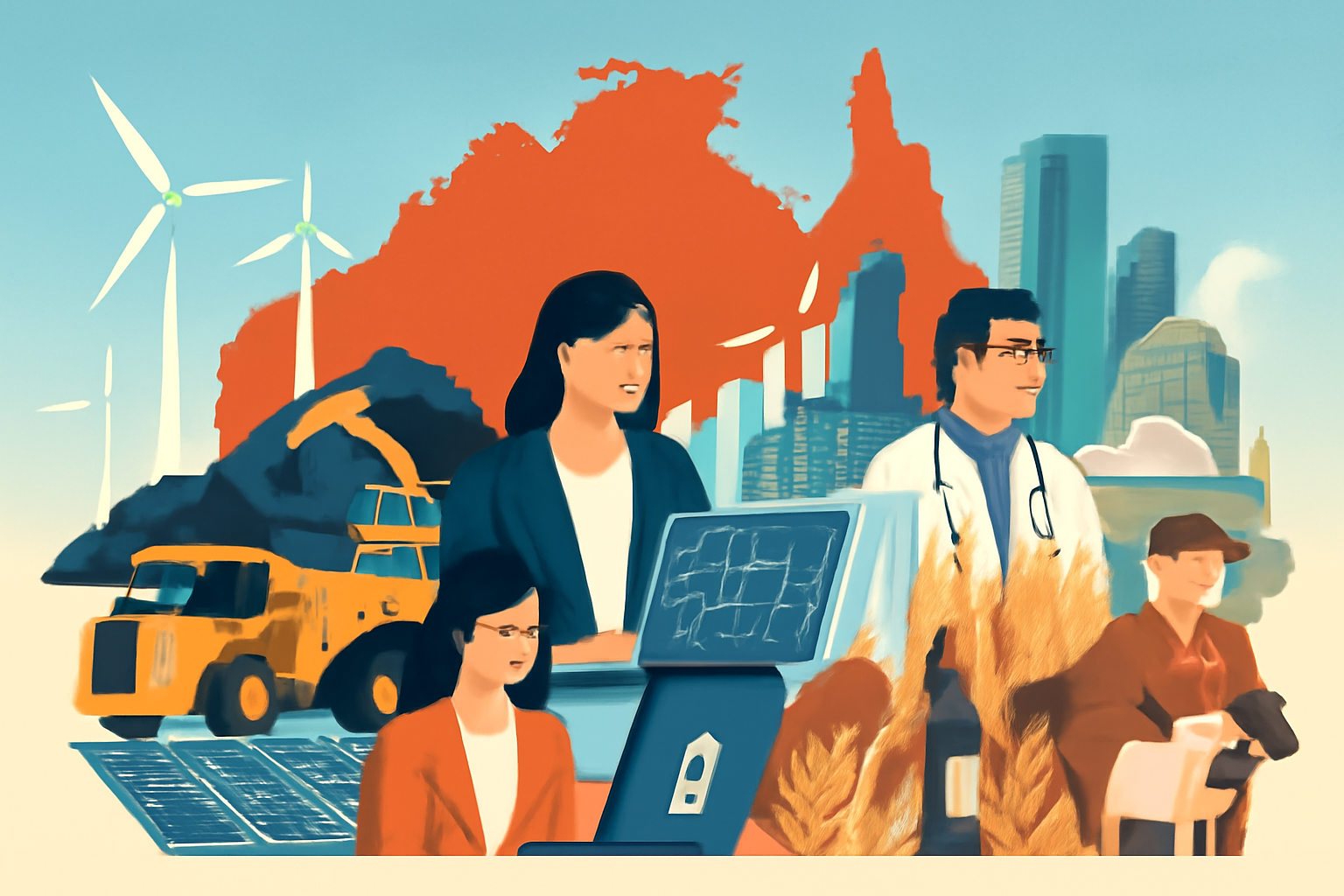
Australia’s economy stands out for its unique blend of abundant natural resources, diverse industries, and a forward-thinking digital transformation. These three areas not only contribute to the nation’s wealth but also define Australia’s position in the global economy. Let’s explore how these elements interact to shape Australia’s economic future.
Natural Resources: Driving Australia’s Economic Growth
Australia is renowned for its rich natural resources, which have been fundamental to its economic growth and global trade relations. The country’s mineral deposits are vast, with Australia being one of the leading producers of commodities such as coal, iron ore, gold, and natural gas. These resources are in high demand worldwide, particularly in neighboring Asian markets like China and Japan, making them crucial for Australia’s export revenues.
Mining has historically been the engine of Australia’s economy, providing both employment and significant tax revenue. The extraction of these resources requires sophisticated technology, which has led to advancements in industrial engineering, automation, and workforce training. Australia’s mining sector is not only about raw materials; it also serves as the foundation for technological innovation in automation, artificial intelligence, and resource management.
Australia is also blessed with agricultural abundance. The country is a global leader in the export of products such as wheat, wool, beef, and wine. The agricultural industry plays a vital role in regional economies, especially in rural areas, and is increasingly adopting sustainable farming techniques to meet global food demand while mitigating environmental impact.
Key Industries: A Diverse Economic Landscape
Beyond natural resources, Australia has a dynamic and diverse industrial base. The nation’s service sector, which accounts for a significant portion of GDP, spans finance, real estate, professional services, and tourism. Australia’s financial sector is well-developed, with Sydney and Melbourne being prominent global financial centers. These cities host a range of international banks, investment firms, and insurance companies.
Tourism is another crucial industry for Australia. The country’s natural beauty, iconic landmarks, and vibrant culture attract millions of visitors each year. The tourism sector contributes billions to the economy, supporting jobs in hospitality, transportation, and entertainment.
Additionally, the manufacturing sector, though facing challenges from low-cost overseas production, is evolving. Australia’s manufacturing industries are increasingly focusing on high-tech and specialized products such as advanced machinery, medical devices, and renewable energy technologies.
The healthcare industry in Australia is also a major driver of economic activity. The country’s public healthcare system, Medicare, offers universal coverage, while the private healthcare sector offers a range of services to complement public provision. As Australia’s population ages, the demand for healthcare services, particularly in aged care and chronic disease management, is expected to grow, presenting both challenges and opportunities for the economy.
The Digital Economy: Innovation and Connectivity
In recent years, Australia has experienced a significant shift towards a digital economy. With rapid advancements in technology, Australia is capitalizing on the potential of digital innovation in areas like e-commerce, fintech, and artificial intelligence. The rise of tech startups in major cities is reshaping the business landscape, with Australian companies increasingly engaging in digital trade and services.
Fintech has emerged as a particularly important sector. Australia has become a hub for digital banking, payments, and blockchain technology. The country’s regulatory environment supports innovation while ensuring consumer protection, making it an attractive destination for fintech entrepreneurs and investors.
Cybersecurity has also become a critical concern in Australia’s digital economy. With the increasing reliance on technology, safeguarding data and ensuring online security is paramount. The government and private sector are working together to strengthen Australia’s digital infrastructure and ensure that the country remains resilient against cyber threats.
The digital economy also encompasses the way Australia’s government, education, and healthcare sectors operate. Government services are being digitized to improve efficiency and access, while digital tools are transforming education and healthcare delivery, making them more accessible to remote and underserved communities.
As the global digital economy expands, Australia is well-positioned to leverage its technological advancements and infrastructure to foster innovation and economic growth. The convergence of natural resources, industries, and digital transformation makes Australia’s economic future bright and filled with opportunities for growth and development.