Editor Team
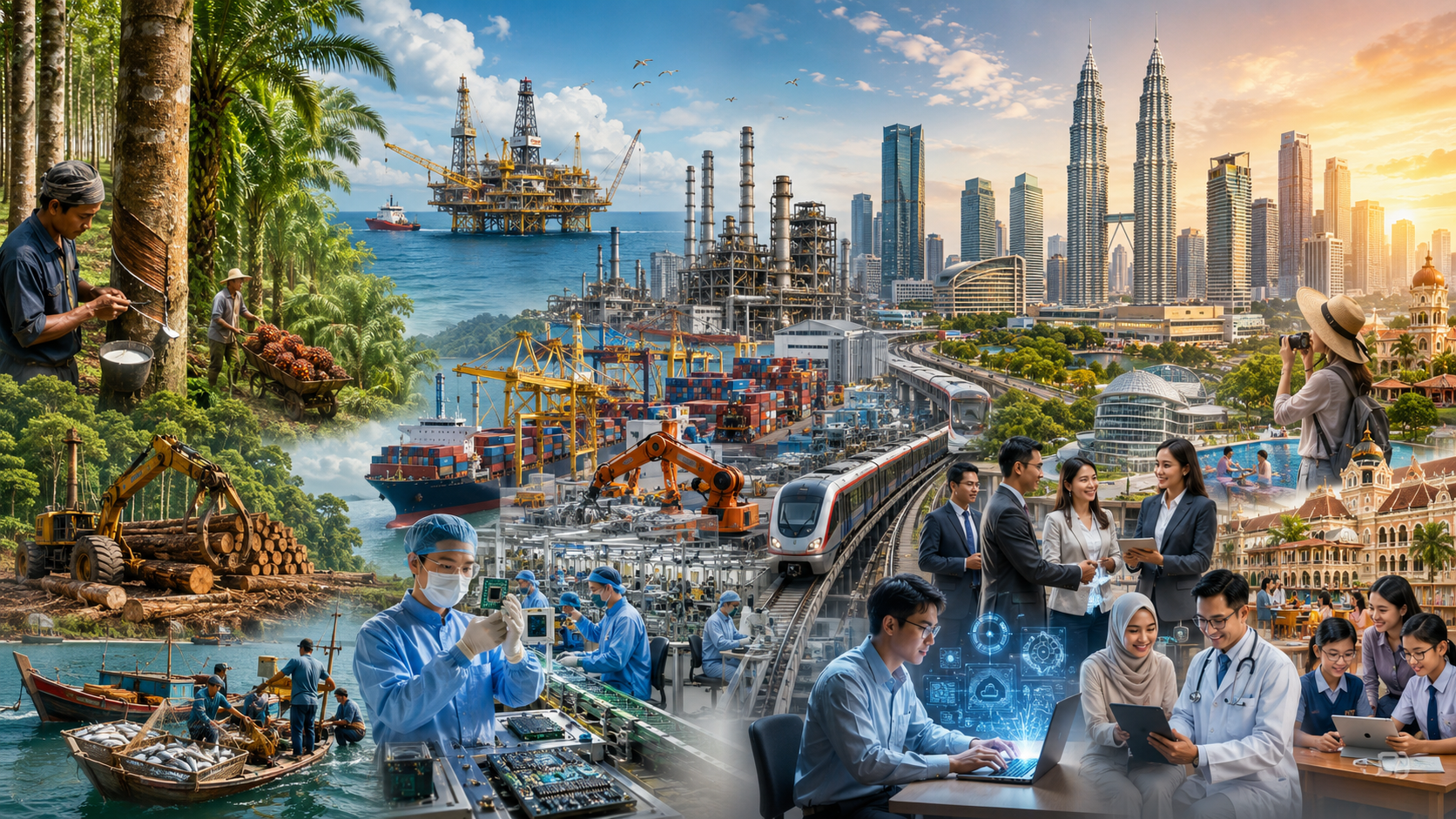
Malaysia has built its economy on a strong mixture of resource-based industries and diversified modern sectors. The country’s development story is not only about natural wealth, but also about how that wealth has been used to support industrialization, services, and technological growth. This combination has helped Malaysia become an upper-middle-income economy with a significant role in regional and global trade.
In the early stages of development, Malaysia depended heavily on commodities. Tin and rubber were once central to export earnings. Over time, the importance of tin declined, while petroleum, natural gas, palm oil, and manufactured products became more prominent. This change shows Malaysia’s ability to adjust to shifting global markets and economic opportunities.
Oil and natural gas remain highly important. Malaysia has offshore energy reserves that contribute to exports and government revenue. The oil and gas industry supports many related activities, including refining, petrochemicals, marine services, engineering, and energy infrastructure. PETRONAS has played a strategic role in developing this sector and using energy income to support broader national development.
Palm oil is another major economic asset. Malaysia’s tropical climate and large plantation areas make it highly suitable for palm oil production. The industry supplies global markets and supports a wide range of products, from cooking oil and margarine to soap, cosmetics, and biofuel. Palm oil also provides income for rural households and smallholders, making it socially important as well as economically valuable.
Nevertheless, the palm oil sector faces strong pressure to become more sustainable. Concerns about forest loss, greenhouse gas emissions, and wildlife protection have affected Malaysia’s reputation in some international markets. As a result, sustainability certification and responsible plantation management have become increasingly important. Malaysia must continue improving environmental standards while protecting the livelihoods of those who depend on the industry.
Rubber offers another example of economic upgrading. Rather than relying only on raw rubber exports, Malaysia developed industries that turn rubber into finished goods. Medical gloves are one of the best-known products, and Malaysia has become a major supplier to the global healthcare market. This shift from raw material production to higher-value manufacturing is a key part of economic diversification.
The need for diversification became clear because commodity-based economies are vulnerable to price changes. Oil, palm oil, rubber, and timber prices can fluctuate due to global demand, supply disruptions, climate conditions, and policy changes in importing countries. Malaysia responded by expanding into manufacturing and services, reducing its dependence on natural resource exports.
Manufacturing has been one of the country’s greatest achievements. The electrical and electronics industry is especially important, contributing strongly to exports and employment. Malaysia produces semiconductors, electronic components, solar products, and industrial equipment. Its position in global supply chains has made it attractive to multinational companies seeking reliable production locations in Asia.
In addition to electronics, Malaysia has developed automotive, chemical, machinery, food processing, and pharmaceutical industries. Industrial parks, ports, highways, and trade agreements have supported this expansion. The country’s strategic location near major shipping routes also strengthens its role as a trade and logistics hub.
Services now represent a large and growing part of Malaysia’s economy. Finance, tourism, education, healthcare, digital services, and retail all contribute to national output. Islamic finance is one of Malaysia’s strongest service industries, supported by strong institutions and global demand. Tourism also brings foreign exchange by showcasing Malaysia’s cities, islands, rainforests, food, and cultural diversity.
Malaysia’s economic strength comes from its ability to use natural resources while building new sources of growth. The country’s long-term challenge is to become more innovative, more sustainable, and less dependent on low-cost production. By investing in skills, green technology, digital transformation, and higher-value industries, Malaysia can continue developing a more balanced and resilient economy.