vritimes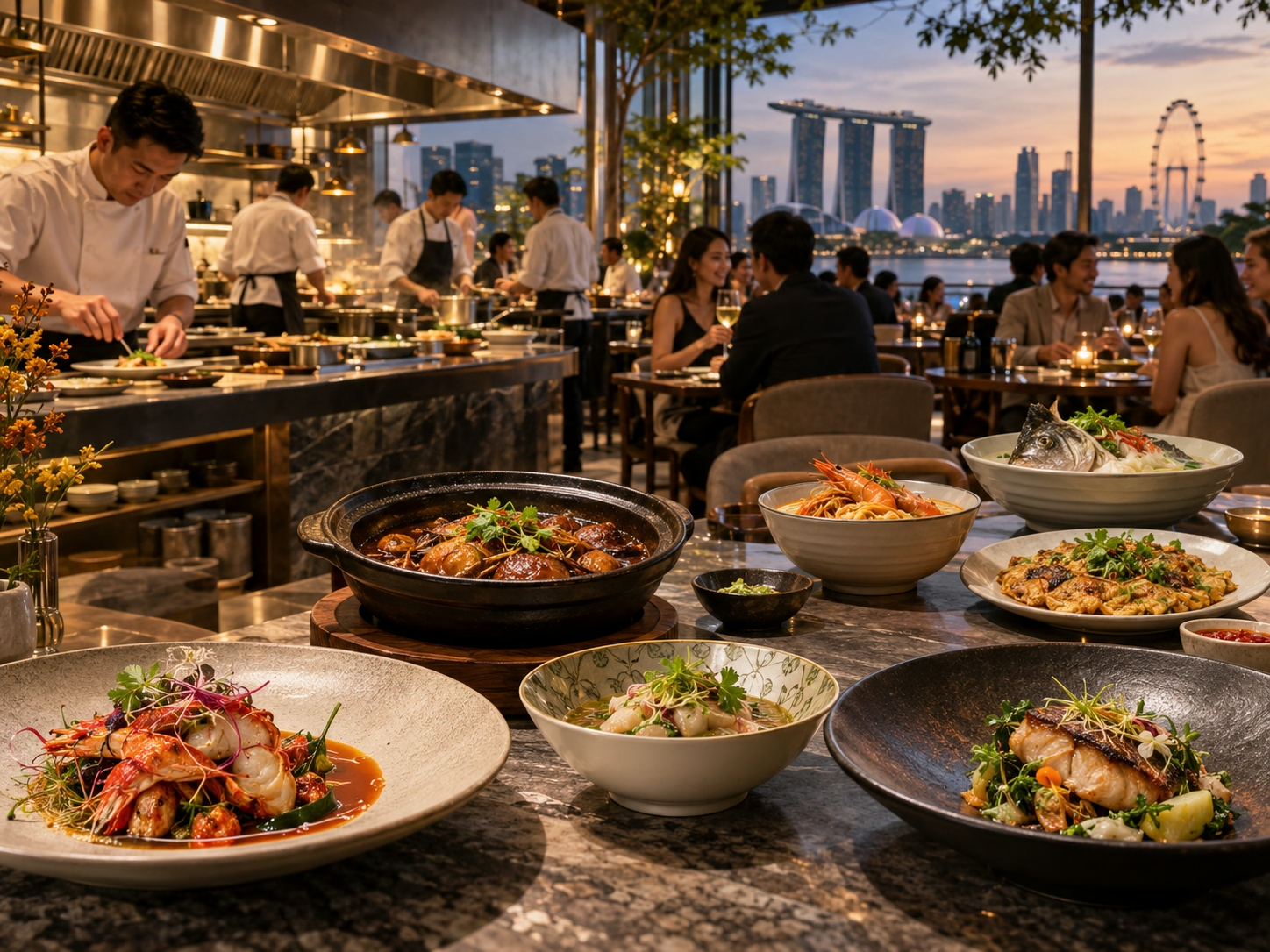
A Decade of Gastronomic Evolution
Singapore’s culinary landscape has undergone a remarkable transformation over the past ten years, and the 2026 Michelin Guide Singapore selection—the milestone tenth edition—serves as a compelling testament to this journey. The guide not only reflects a decade of culinary evolution but also coincides with the 100th anniversary of the Michelin Star globally, adding historical weight to this year’s announcements.
The 2026 selection welcomed six new one-star restaurants and two new two-star establishments, including the highly anticipated 1887 by André, which made a surprising debut with two stars at Raffles Hotel Singapore. This expansion signals not merely growth but a deepening of Singapore’s gastronomic identity—one that is increasingly confident, nuanced, and globally influential.
Trend 1: The Rise of Ingredient-Led Cooking
One of the most striking developments identified by Michelin inspectors is a philosophical shift toward simplicity and ingredient integrity. Chefs across the island are embracing a “less is more” approach, constructing dishes around clean, pure flavors with fewer components and a clearer sense of purpose.
This movement represents a maturation of Singapore’s culinary scene. Rather than pursuing complexity for its own sake, chefs are demonstrating the confidence to strip dishes back to their essential elements, allowing each ingredient to communicate its own story. The result is food that feels more balanced, expressive, and memorable—a sign of a dining culture that has found its voice.
Trend 2: Hyper-Regional Chinese Cuisine Takes Center Stage
Singapore’s Chinese dining scene is experiencing a renaissance of regional specificity. A new wave of restaurants is bringing distinct culinary traditions from across China to Singapore’s shores, moving far beyond the generic interpretations that once dominated the market.
Diners are increasingly gravitating toward the sharp, fresh-chili heat of Hunanese cuisine and the complex, sour, fermented profiles of Guizhou and Yunnan cooking. These hyper-regional concepts are backed by established restaurant groups from the regions themselves, bringing authentic techniques and ingredients to Singapore’s tables. The emergence of Shenyang-style claypot barbecue chains and Fujian artisanal dining concepts underscores how Singapore has become a primary international springboard for Chinese F&B conglomerates.
Trend 3: A More Casual Kind of Luxury
Perhaps the most significant consumer-facing shift is the redefinition of luxury dining itself. Traditional fine dining—with its stiff white tablecloths and multi-hour tasting menus—is experiencing a cooling period. In its place, “casual luxury” has emerged as the dominant premium format.
Diners now prefer intimate, high-energy, unpretentious spaces that deliver exceptional culinary craft and ingredient sourcing without the formality of old-school fine dining. This democratization of excellence reflects a broader cultural shift in Singapore: one that values authenticity and accessibility over exclusivity and ceremony.
Trend 4: Singapore as a Global Culinary Talent Magnet
Singapore’s open and international dining scene has become an increasingly attractive destination for culinary professionals worldwide. Established chefs are choosing the city for new ventures, while a rising generation of younger chefs is reaching important career milestones and bringing fresh ideas to the local landscape.
This influx of international talent extends beyond the kitchen. Leading sommeliers and service professionals are bringing deeper expertise to dining rooms across the city, elevating the entire hospitality ecosystem. The convergence of global talent in Singapore is strengthening its position as a dynamic platform for culinary collaboration and innovation.
The 2026 Bib Gourmand Selection: Celebrating Everyday Excellence
The Michelin Guide Singapore 2026 Bib Gourmand selection added 10 new establishments, bringing the total to 97. New entrants include Boon Keng Road Fish Head Bee Hoon, Hup Kee Fried Oyster Omelette, and King of Laksa—establishments that represent the soul of Singapore’s hawker heritage.
These recognitions underscore a crucial truth about Singapore’s culinary identity: excellence exists at every price point. The Bib Gourmand list serves as a reminder that some of the city’s most compelling food experiences can be found in its hawker centres and neighborhood eateries, not just in its temple-like fine dining rooms.
For a comprehensive view of the complete 2026 selection, the official Michelin Guide Singapore provides detailed listings of all starred restaurants, Bib Gourmand eateries, and selected addresses.


 Editor Team