vritimes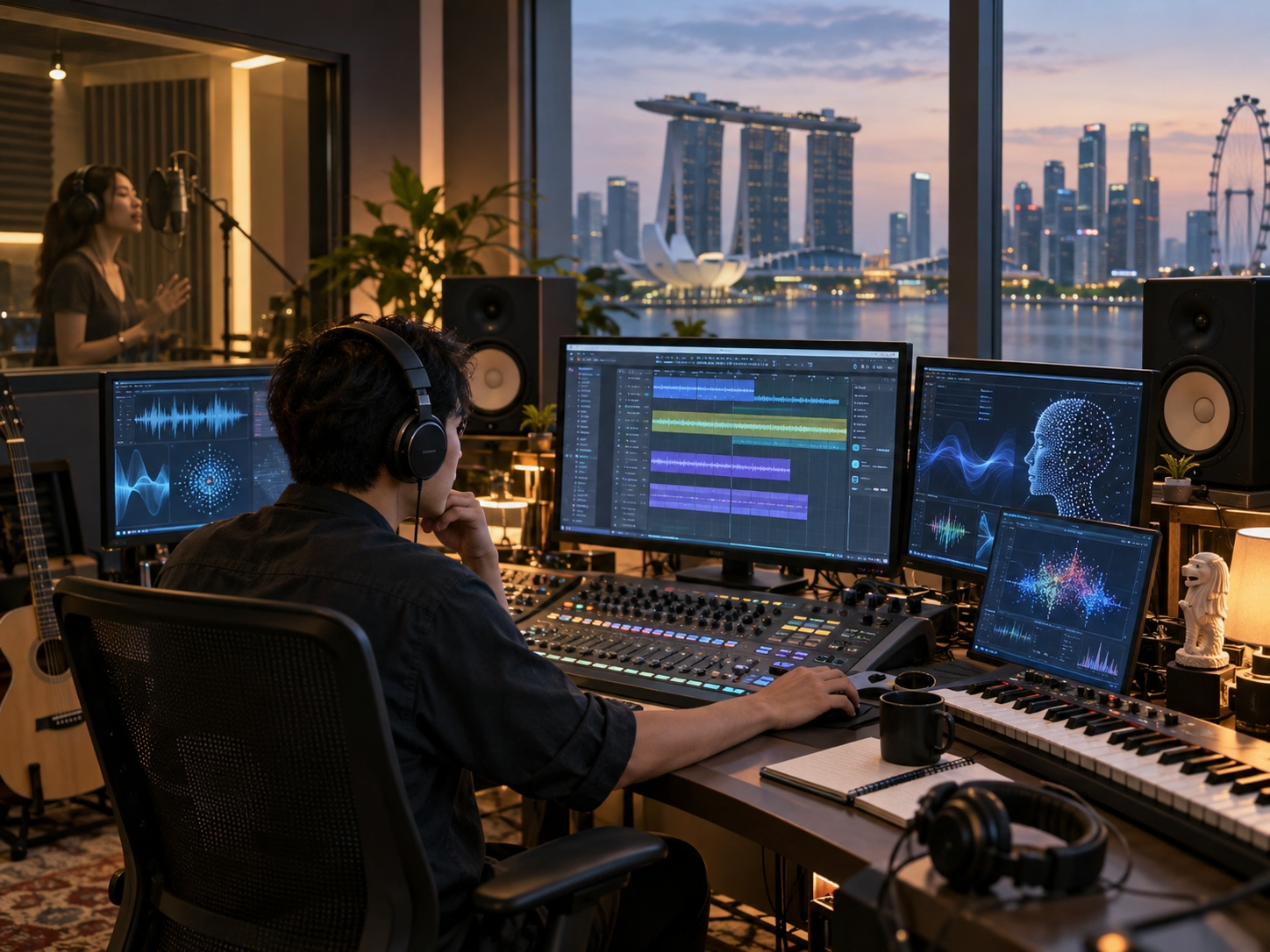
Singapore’s music production sector is confronting an unprecedented structural transformation as artificial intelligence tools fundamentally alter how audio content is created, priced, and delivered. The impact is neither subtle nor gradual—it is immediate, measurable, and forcing studios to rethink their entire operational models.
The Budget Collapse: A 60% Reality Check
Music production houses across the city-state have reported project budget reductions ranging from 10 to 40 per cent, with certain projects experiencing cuts of up to 60 per cent over the past two to three years. Donny Pereira, CEO of music production company plusONE, confirmed that while content volume continues to grow, the financial resources allocated per project have contracted dramatically.
This compression is directly attributable to AI-powered music and voice-generation platforms that deliver comparable output at a fraction of traditional costs and timelines. Freeing clients from the constraints of studio booking, session musician fees, and extended post-production cycles, these tools have fundamentally altered procurement decisions across advertising, broadcasting, and digital content sectors.
Creative Professionals at the Crossroads
The human cost is tangible. Freelance opportunities in music composition and voice work have declined by approximately 20 to 30 per cent, according to industry estimates. Music agency Cross Ratio Entertainment has similarly documented project budget reductions, indicating that the pressure is systemic rather than isolated to particular studio sizes or specialisations.
Industry veterans acknowledge that AI cannot yet replicate client servicing, strategic creative direction, or the nuanced emotional intelligence that underpins effective brand communication. However, the economic argument for AI-assisted production has become increasingly difficult to counter when clients can generate broadcast-ready audio assets within hours rather than weeks.
The Singaporean Response: Adaptation Over Resistance
Rather than positioning AI as an existential threat, leading studios are integrating generative tools into their workflows while simultaneously emphasising the irreplaceable value of human creativity. This hybrid approach mirrors strategies emerging across Singapore’s broader creative economy, where technological adoption is framed as a competitive necessity rather than an ideological compromise.
The Infocomm Media Development Authority (IMDA) has launched complementary initiatives to support this transition, including the S$48 million Digital Content and Capability Development programme, which provides accredited media companies with resources to experiment with AI-assisted production workflows. The programme explicitly recognises that short-form videos, microdramas, and AI-generated content are gaining traction alongside a new generation of digitally native creators.
What This Means for Singapore’s Musical Identity
For a nation that has cultivated a distinctive musical voice through artists like Dick Lee and Jeremy Monteiro, the AI disruption raises questions that extend beyond economics. The debate surrounding National Day Parade 2026 songs, where both veterans weighed in on the singability and cultural resonance of contemporary compositions, illustrates an ongoing negotiation between tradition and technological evolution.
The studios that will thrive are those treating AI as a production accelerator rather than a replacement for human judgement. The creative decisions—what story to tell, which emotional register to strike, how to connect with an audience—remain stubbornly, gloriously human.
The Road Ahead
Singapore’s music industry is not collapsing; it is recalibrating. The next 24 months will determine which studios successfully integrate AI into sustainable business models and which fail to adapt. For now, the data tells a story of disruption, but the creative community’s response will ultimately determine the narrative’s conclusion.


 Editor Team