vritimes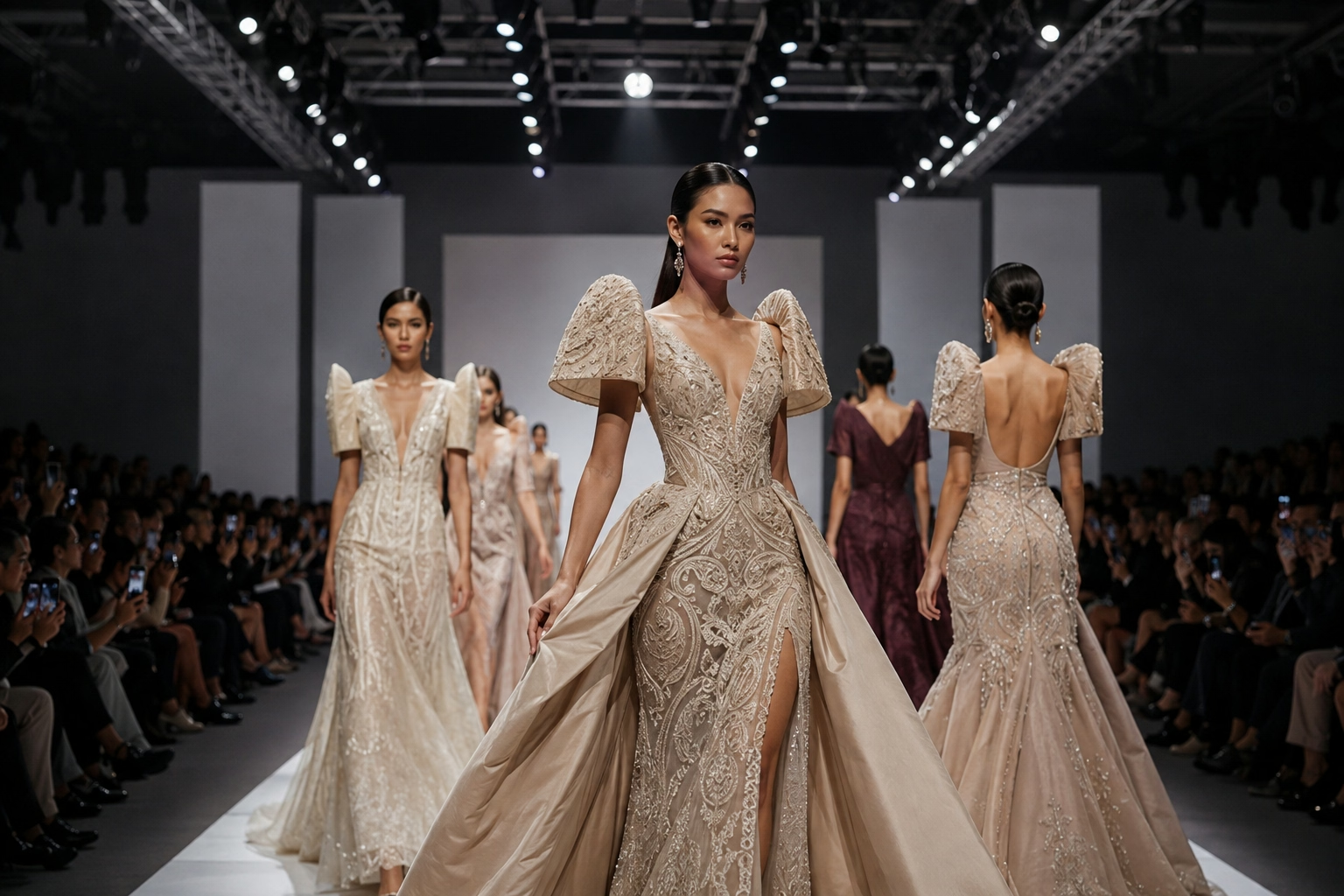
The New Wave of Filipino Design Talent
The Philippine fashion industry has moved beyond regional recognition. A growing roster of designers is now presenting collections in Milan, Paris, and New York, shifting the global conversation toward Manila as a source of sophisticated craft and contemporary silhouettes. This visibility is not accidental; it is the result of years of formal training, government export programs, and a diaspora that amplifies Filipino talent across key fashion capitals.
Michael Cinco’s Middle East Luxury Circuit
Dubai-based Filipino designer Michael Cinco remains one of the strongest examples of international penetration. His heavily embellished gowns are routinely worn by Middle Eastern royalty and global celebrities. In 2026, Cinco expanded his atelier operations to Paris, a move that underlines how Filipino designers are no longer limited to client bases in Asia. His brand demonstrates that high-value bespoke fashion can originate from Filipino creative direction and compete with European maisons.
Monique Lhuillier’s Hollywood Red Carpet Legacy
While Monique Lhuillier has long been a red-carpet staple in Hollywood, her continued presence in 2026 proves the durability of Filipino design aesthetics. Lhuillier’s ability to balance romance with modern structure has made her a favorite among A-list actresses and bridal buyers. Her success has opened doors for younger designers who now see international retail as a realistic goal rather than an exception.
Why International Buyers Are Paying Attention
International buyers are drawn to Filipino fashion for three reasons: competitive production costs, a unique design language that blends Asian and Western influences, and increasing reliability in supply chain management. Boutique retailers in Europe and North America have started sourcing directly from Manila-based labels, bypassing traditional wholesale hubs. This shift is supported by digital showrooms and virtual market appointments that reduce travel costs and speed up order cycles. Fashion education has also improved, with institutions like the Fashion Institute of the Philippines producing graduates who understand both creative design and commercial viability.
Data Signals a Maturing Export Sector
According to Statista’s 2026 apparel market outlook, the Philippine apparel segment is projected to generate USD 8.1 billion in revenue, signaling robust domestic demand and expanding export capacity Statista. This figure reflects not only mass-market production but also the premium segment where Filipino designers operate. As the middle class in Southeast Asia grows, Philippine brands are also finding regional buyers in Indonesia, Thailand, and Vietnam, further diversifying revenue streams.
The runway presence of Filipino designers in 2026 is no longer a novelty. It is part of a structural shift in which Manila functions as both a creative hub and a production base. The next phase will likely involve deeper partnerships with European fashion schools and more direct-to-consumer channels, but the foundation has already been laid.


 Editor Team