vritimes
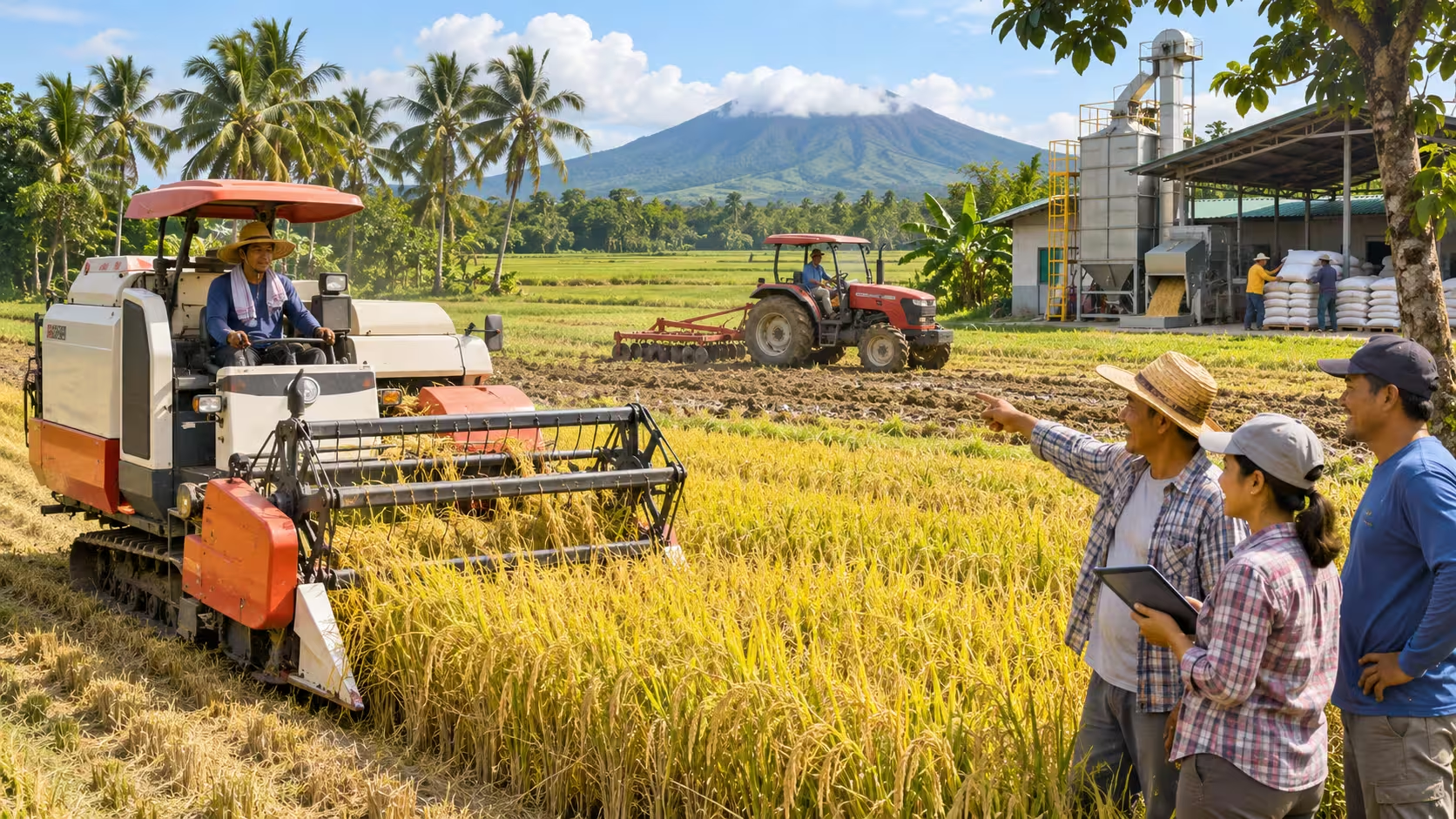
Agricultural drones moved from demonstration plots to working rice fields and banana plantations in 2026, as the Department of Agriculture (DA) expanded precision farming initiatives across Western Visayas and Mindanao. The shift is not experimental in scale: in Iloilo alone, more than 2,000 hectares of rice fields were placed under free drone services, while in Davao del Norte and Davao de Oro, AI-powered aerial imaging began pilot testing on commercial banana farms.
Iloilo’s 2,146-Hectare Drone Pilot
Under the DA’s Agri Drone Project, 2,146 hectares across 15 municipalities in Iloilo were identified as priority areas for the wet cropping season, making the province the only pilot site in Western Visayas. The service package covers direct seeding and the application of molluscicides, herbicides, insecticides, fungicides, and foliar fertilizers, with geo-mapping conducted before operations to ensure accurate flight planning and precise input application. The efficiency gain is stark: a drone can spray one hectare in eight to ten minutes, using significantly less water and chemical solution than manual methods while reducing labor requirements and production costs. Mark Lester Gamboa, Agriculturist II at the DA Western Visayas Rice Program, said there is no minimum or maximum farm size to qualify, making the program accessible to eligible rice farmers regardless of landholding.
AI-Powered Aerial Imaging in Banana Farms
In Davao, the DA began pilot testing AI-driven drones on three banana farms in Davao del Norte and Davao de Oro after signing a memorandum of understanding with Japanese technology provider E-SupportLink. The system combines real-time environmental data gathered by drones with historical weather patterns and machine-learning models to predict pest infestations and other crop threats before outbreaks spread. DA Undersecretary Cheryl Natividad-Caballero described the shift as moving farm management from reactive to preventive: “We can identify where problems may start before they become bigger issues,” she said, adding that early detection lowers the cost of controlling disease outbreaks. The technology has already been used on farms in Japan, and the Davao pilot has drawn interest from private banana producers seeking aerial data for production planning and disease monitoring.
The Economics of Precision Spraying
Precision agriculture is being sold to farmers on cost avoidance as much as yield gains. Drone-assisted spraying reduces chemical waste through uniform application, cuts the labor needed for manual spraying, and addresses shortages in farming communities where able-bodied workers are increasingly scarce. For high-value crops such as mangoes, the DA has also distributed agricultural drones worth PHP1.780 million to individual growers, with precision application allowing insecticides and fertilizers to be used more efficiently. Agriculture Secretary Francisco P. Tiu Laurel Jr. welcomed the AI-driven technology but stressed affordability: “The technology is promising, but we need to make sure it becomes affordable and accessible not only to large companies but, more importantly, to small farmers”.
From Pilots to Policy: What Comes Next
The DA is examining applications beyond rice and bananas, including sugarcane and coconut, two export crops facing production challenges. The agency is also studying training assistance through the Agricultural Training Institute and potential funding mechanisms to help drone operators and farmers adopt the systems. With Iloilo serving as the regional pilot, the DA hopes the results will pave the way for a wider rollout across Western Visayas in succeeding cropping seasons.


 Editor Team