Editor Team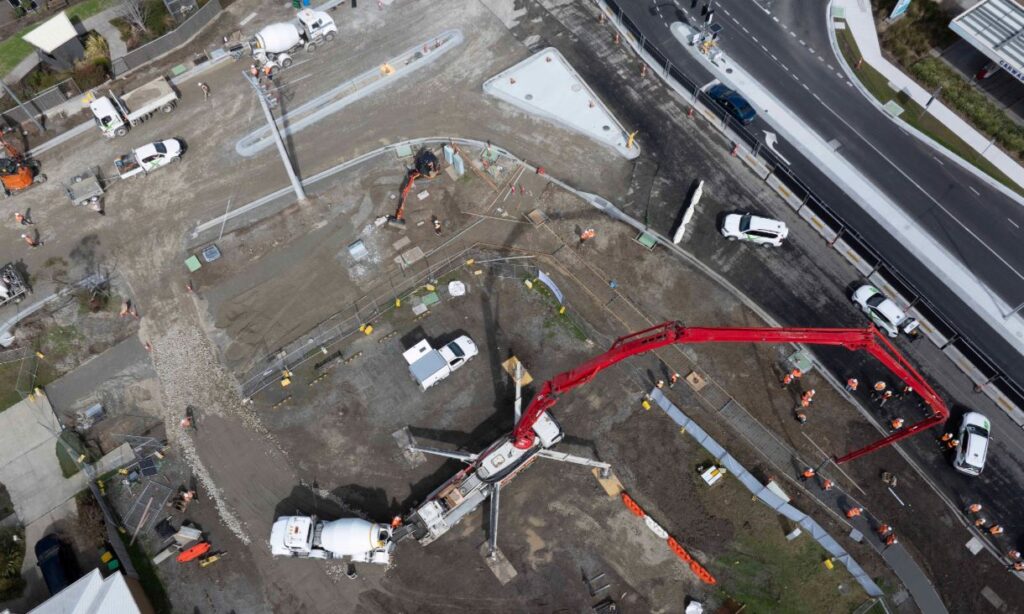
RMIT researchers are advancing new ways to cut the carbon footprint of infrastructure by turning everyday organic waste into useful construction materials.
A life-cycle analysis has shown, for the first time, that biochar made from spent coffee grounds can help produce a lower‑carbon concrete while supporting strength benefits seen in earlier lab trials.
Earlier experiments by the RMIT team heated used coffee grounds at about 350 degrees Celsius without oxygen to make a fine biochar. When this replaced 15 percent of sand in concrete, 28‑day strength increased by about 30 per cent, pointing to a practical way to reduce pressure on natural sand supplies.
Building on that foundation, a new study led by Dr Jingxuan Zhang and Dr Mohammad Saberian presents a comprehensive life cycle assessment – a cradle‑to‑grave analysis that measures carbon emissions, resource use and other environmental impacts from production through to end of life.
The results show life‑cycle carbon dioxide reductions of 15 percent, 23 percent and 26 per cent at 5, 10 and 15 per cent biochar replacing sand, along with up to 31 percent lower use of fossil fuels and improvements in impacts on rivers and lakes.
This research supports Australia’s shift to a circular economy and net‑zero goals by turning abundant waste into functional materials, reducing reliance on natural sand and building public engagement with resource recovery.
Zhang said the findings strengthened the case for real‑world trials.
“We showed that coffee biochar can cut concrete’s carbon footprint in the scenarios we assessed, while earlier trials demonstrated strength gains using the same approach,” said Zhang from the School of Engineering.
Professor Chun-Qing Li, who provided guidance to the team, said the innovation turned organic waste into a practical ingredient for lower‑carbon infrastructure.
“Using moderate amounts of coffee biochar offers a clear, measurable pathway to lower‑impact concrete,” he said.
Saberian said the team was already engaging with industry as well as state and local governments on construction projects.
“Next steps include larger pilots, mix optimisation and alignment with standards so projects can adopt this confidently,” he said.
“We welcome collaboration on supply chains and field deployments.”
RMIT and partners have already advanced public demonstrations, including a footpath pilot and the first coffee‑biochar concrete section on the Victorian Big Build, and showcased the concept through the National Gallery of Victoria’s Making Good: Redesigning the Everyday exhibition.
Prospective industry and government partners interested in pilots, product development or supply‑chain scale‑up can contact RMIT’s research partnerships team at research.partnerships@rmit.edu.au
The study, ‘Carbon footprint reduction in concrete using spent coffee grounds biochar: a life cycle perspective’, is published in the International Journal of Construction Management (DOI: 10.1080/15623599.2025.2584549).
Jingxuan Zhang, Mohammad Saberian, Rajeev Roychand, Jie Li, Chun-Qing Li, Guomin Zhang and Dilan Robert are authors on the paper.
Interviews:
Dr Jingxuan Zhang, +61 478 903 368,jingxuan.zhang@rmit.edu.auDr Mohammad Saberian, +61 481 942 713, mohammad.saberian@rmit.edu.au