vritimes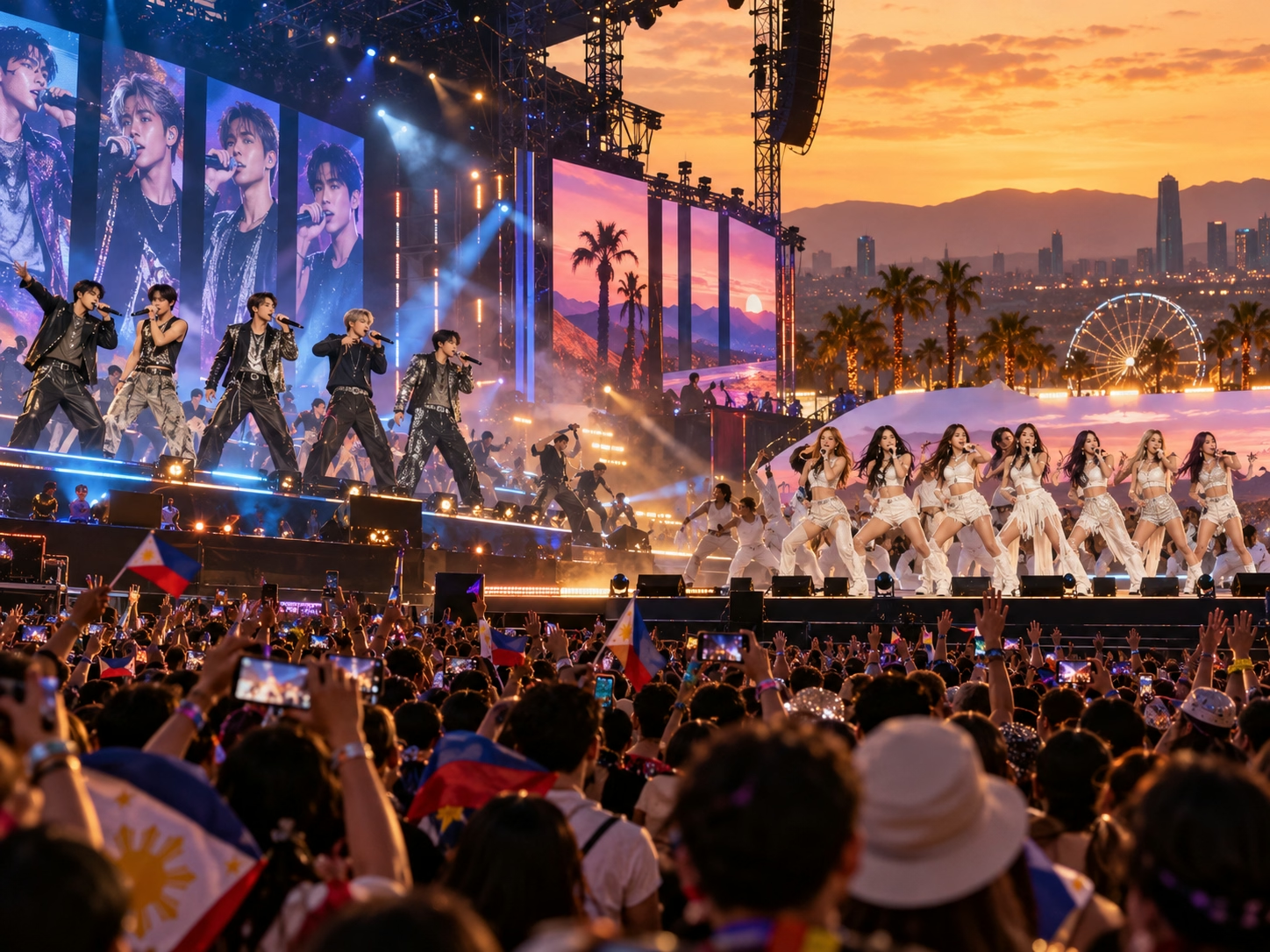
The Year Filipino Pop Finally Conquered International Festivals
The Philippine music industry has long been a powerhouse within Southeast Asia, but 2026 marked the year that Filipino talent shattered the glass ceiling of the global festival circuit. Two acts — SB19 and BINI — became the first Filipino groups to perform at Lollapalooza and Coachella respectively, transforming Original Pilipino Music (OPM) from a regional phenomenon into a legitimate international cultural export.
SB19 at Lollapalooza: A Senate Resolution and a 48-Minute Statement
On July 30, 2026, SB19 took the Allianz stage at Lollapalooza in Chicago’s Grand Park, delivering a 48-minute set that included hits like “Dungka,” “Dam,” and “Gento,” alongside ballads “Mapa” and “Wakas.” The quintet — composed of Pablo, Stell, Justin, Josh, and Ken — also debuted two new songs, “Lawless” and “Emoji,” the latter a collaboration with Taiwanese singer Jolin. The performance was so significant that the Philippine Senate adopted Resolution No. 545, filed by Sen. Bam Aquino, formally recognizing SB19 as the first Filipino group to perform at the iconic festival.
Sen. Aquino framed the achievement as more than a musical milestone, calling it “an inspiration to Filipinos aspiring to showcase their talent on the global stage” and urging reforms to strengthen the country’s creative economy. The resolution underscored a critical point: Filipino talent can compete at the highest levels, but sustained government and industry support remains essential.
BINI at Coachella: Eight Million Engagements in Eight Hours
Two months earlier, BINI made history as the first P-pop act and the first Southeast Asian girl group to perform at Coachella. Their 45-minute set at the Mojave Tent on April 10, 2026, generated nearly 8 million social media engagements within eight hours, while a reel of their closer “Pantropiko” amassed over 25 million views on Coachella’s official Instagram page — second only to headliner Justin Bieber. The Philippine House of Representatives responded with House Resolution No. 1001, adopted on May 13, 2026, commending the group for demonstrating that “Filipino musicality and artistry can compete and excel at the highest levels of the international entertainment industry”.
BINI’s journey is particularly instructive. Formed in 2021 through Star Hunt Academy, ABS-CBN’s talent search modeled after the K-pop trainee system, the octet represents a deliberate strategic investment in idol-style development. Their Coachella slot was not an accident — it was the culmination of years of rigorous training, precision choreography, and a fanbase cultivated across digital platforms.
The Strategic Infrastructure Behind the Breakthroughs
What distinguishes 2026 from previous waves of Filipino music exports is the institutional architecture emerging to support it. ABS-CBN launched ABS-CBN Music International (AMI) in April 2026, a joint venture between ABS-CBN Music and ABS-CBN Global designed to create a “cross-border pipeline of artists, content, and audiences”. Jun del Rosario, head of ABS-CBN Global, stated plainly: “Filipino music is no longer emerging — it’s here”. The initiative’s first wave of artists includes JMKO and Acoya, alongside established acts like BINI, BGYO, and Maki.
Sony Music Publishing also established a Philippine arm in February 2026, signaling that global rights management infrastructure is finally catching up to the country’s creative output. The launch focused explicitly on educating Filipino songwriters about publishing, rights management, and earning potential — a long-standing gap in the industry. Pablo of SB19 and Paolo Benjamin of Ben&Ben participated in the launch panel, underscoring the initiative’s focus on elevating the craft behind the hits, not merely the performers.
What 2026 Reveals About Filipino Music’s Next Chapter
The festival debuts and institutional investments tell a coherent story: Filipino music has moved from proving its talent to building the systems that sustain global careers. The challenges remain substantial — funding for international promotion, rights infrastructure, and sustained artist development — but the foundation is now in place. For the first time, Filipino artists are not just visiting the global stage; they are claiming it.


 Editor Team