Editor Team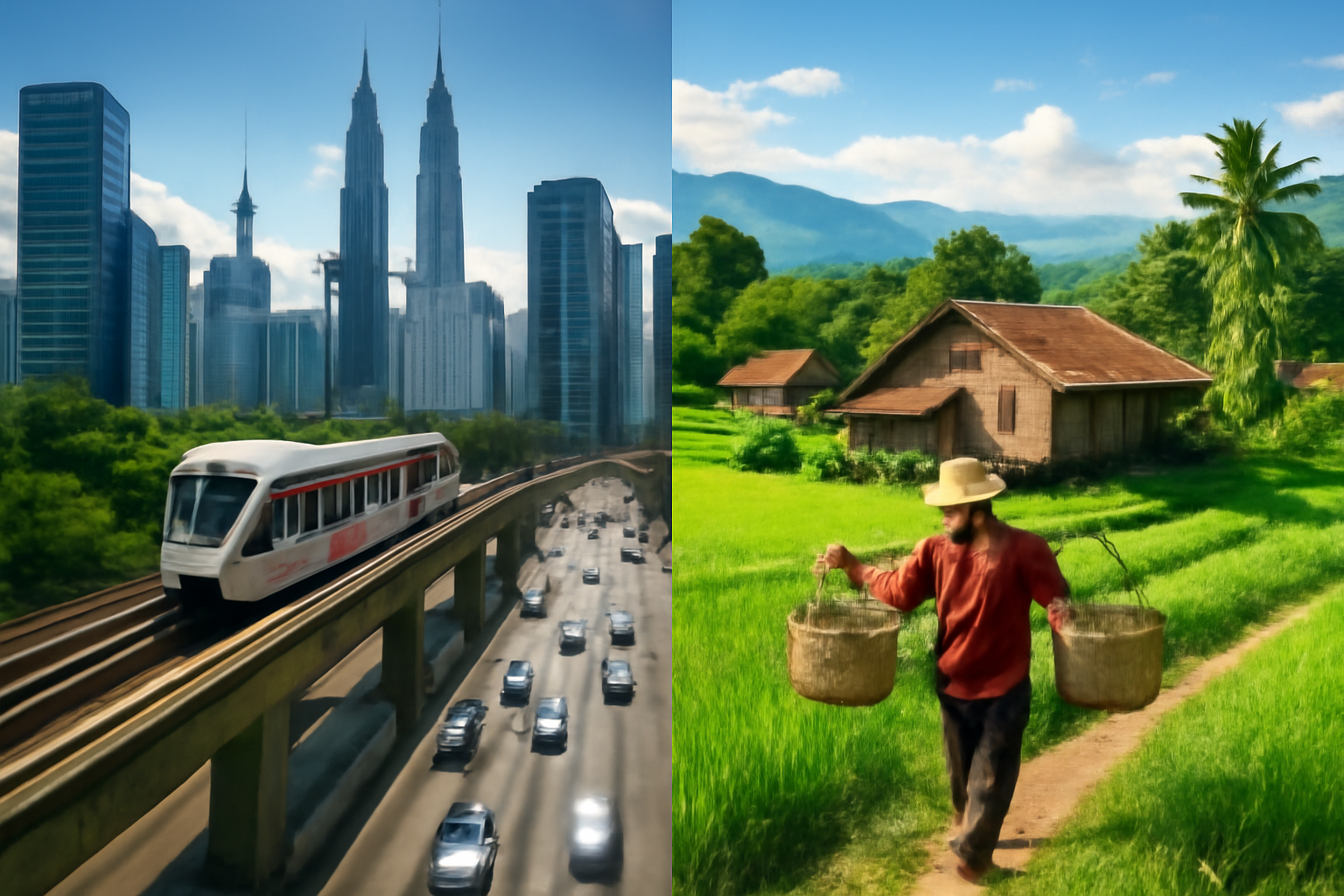
Life in Malaysia’s cities and rural areas presents stark contrasts that shape the experiences of its inhabitants. Both urban and rural regions offer distinct advantages and hurdles, and each has its own set of opportunities that can impact the residents’ quality of life.
Urban vs. Rural Living
Urban life in Malaysia, especially in large cities like Kuala Lumpur, Melaka, and Johor Bahru, is vibrant and dynamic. These metropolitan areas are hubs for business, commerce, and culture. People in cities benefit from cutting-edge healthcare, modern educational institutions, and the convenience of shopping, dining, and entertainment. The public transport systems in places like Kuala Lumpur make it easier to navigate the urban sprawl, allowing people to live in one part of the city while working or studying in another.
Conversely, life in rural Malaysia, such as in villages in Sabah or Perak, is generally more laid-back. The sense of community is stronger, and people tend to rely on traditional occupations like farming, fishing, and livestock management. The lifestyle is slower-paced, and the natural beauty of the countryside provides a peaceful environment that many city dwellers envy. However, the lack of modern amenities such as fast internet and high-quality healthcare can make rural life more challenging for some.
The Struggles of Living in the City or Village
In urban areas, the most pressing challenges are related to the high cost of living. Housing prices, especially in Kuala Lumpur, are skyrocketing, making it harder for young families to buy property. Additionally, the fast-paced nature of city life can lead to stress, with people constantly juggling work, family, and social responsibilities. Public transportation, although efficient in some cities, can still be crowded, especially during peak hours. Another concern is environmental pollution, which is a growing problem in major Malaysian cities.
Rural areas, while generally more affordable, are not without their own difficulties. One of the biggest challenges for those living in villages is limited access to high-quality education and healthcare. Schooling options in rural areas may not be as advanced as those in cities, and medical facilities may be few and far between. Employment opportunities are often restricted to agriculture and small local businesses, which may not provide the level of income or career growth seen in urban sectors. Furthermore, infrastructure issues, such as unreliable roads and limited internet access, can hinder the daily life of rural residents.
Unlocking Potential in Both Environments
Although urban life comes with its set of difficulties, it offers ample opportunities for career advancement, especially in sectors such as finance, technology, and healthcare. Cities also provide greater exposure to international markets, fostering entrepreneurship and innovation. People living in cities are often in a better position to access professional networks, making it easier to find job opportunities and career mentorship.
Rural areas, however, provide unique opportunities in agriculture, ecotourism, and local craftsmanship. The Malaysian government has invested heavily in rural development, and with initiatives such as subsidies for farmers and infrastructure improvements, rural residents now have better access to markets and digital platforms. There is also a growing trend toward sustainable farming and organic produce, which creates new economic possibilities for rural communities. Rural areas, with their pristine landscapes and cultural heritage, are increasingly attracting tourists seeking authentic experiences.
Considerations for Urban and Rural Lifestyles
When deciding whether to live in an urban or rural area in Malaysia, it is important to evaluate personal preferences and career goals. Cities are ideal for those seeking professional opportunities and a fast-paced, convenient lifestyle. However, they come with challenges like high living costs, pollution, and overcrowding. Rural areas offer a serene, nature-oriented way of life with lower living costs, but the lack of infrastructure and career opportunities can be limiting. The ideal choice depends on individual priorities, whether one values modern conveniences or seeks a more tranquil, community-focused existence.