Editor Team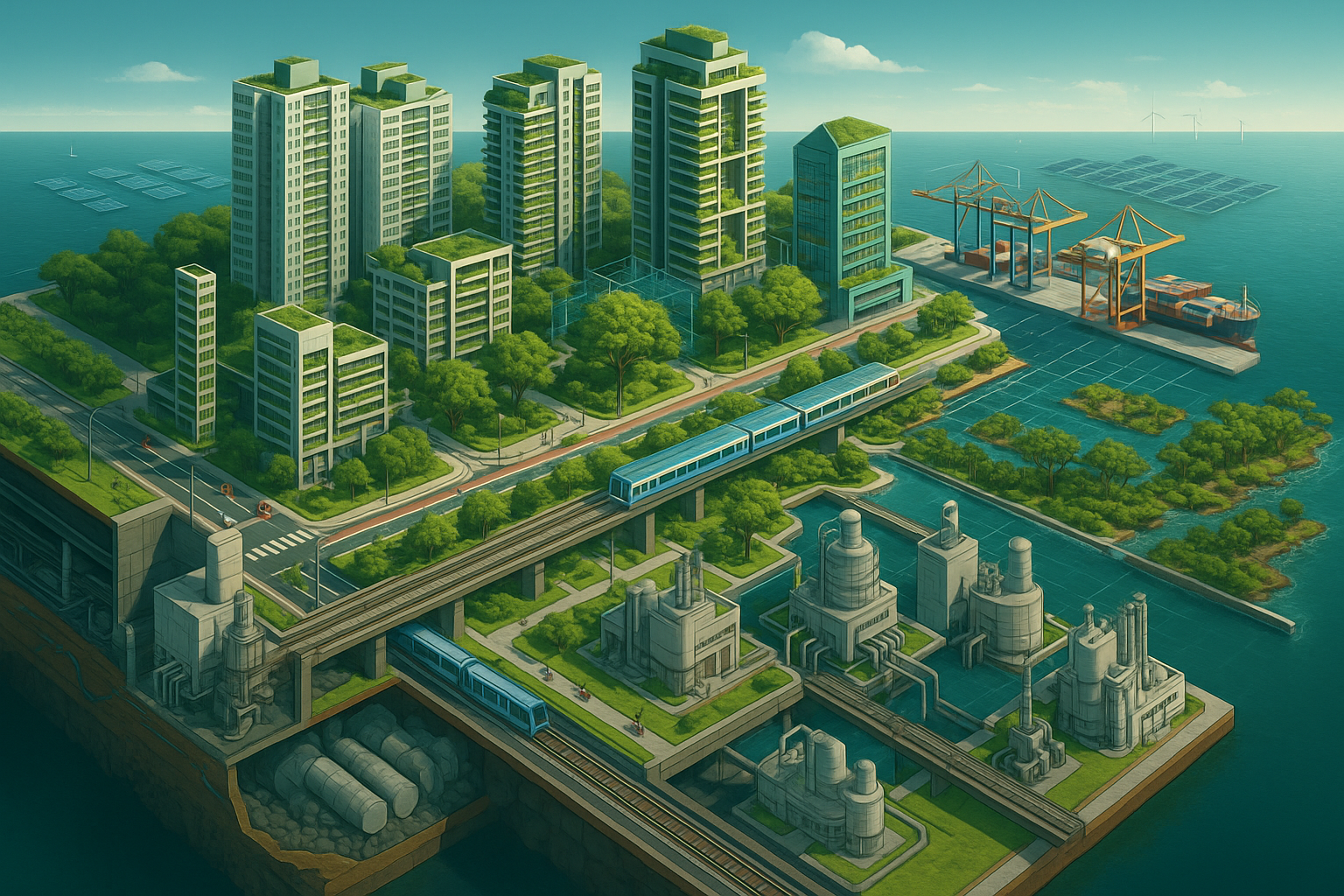
Modern Singapore is the product of deliberate geographic edits. In little more than a generation, swamps gave way to airports, shipyards, petrochemical hubs, and dense residential towns. Land reclamation extended shorelines, ports consolidated at purpose-built terminals, and the airport advanced through staged expansions that aligned with traffic growth and land efficiency. Each intervention traded sand, steel, and capital for long-term flexibility: a coastline that could host industry today and urban life tomorrow.
The city’s planners work like chess players thinking several moves ahead. Shifting a container terminal is not simply a logistics upgrade; it liberates waterfront land for housing, offices, and parks. Creating underground storage frees surface plots for transit-oriented development. Reserving corridors for future rail protects today’s neighborhoods from disruptive retrofitting. Such choreography requires disciplined institutions, transparent land-use guidelines, and a social compact that accepts near-term inconvenience for shared future gains.
Water security illustrates how engineering substitutes for absent rivers. Extensive catchments, crafted reservoirs, and recycling technologies together diversify supplies. Desalination adds a weather-proofed layer, while demand management and leakage control squeeze more value from each liter. The message is consistent: reliability in a resource-poor city is achieved by stacking redundancies, not by betting on a single silver bullet. This same logic now informs energy planning, where efficiency, renewables, and cross-border links are pursued in concert.
Urban quality has never been an afterthought. Parks are stitched into the urban fabric via green connectors; skyrise gardens soften the skyline; and design codes prioritize shade, ventilation, and walkability. In a dense city, microclimate is infrastructure. Tree canopy, reflective materials, and breezeways matter as much as highways. Nature reserves, while spatially costly, deliver services—cooling, flood mitigation, recreation—that no building can fully replace.
Reimagination also extends to industry. Clean rooms and advanced manufacturing thrive on reliability more than land area, while digital services scale without consuming vast estates. Zoning encourages higher-value, cleaner activities to outcompete land-hungry, lower-yield uses. The constant question remains: does each hectare serve the city’s long-term strategy? In Singapore, the answer is periodically recalculated, neighborhood by neighborhood, generation by generation.