Editor Team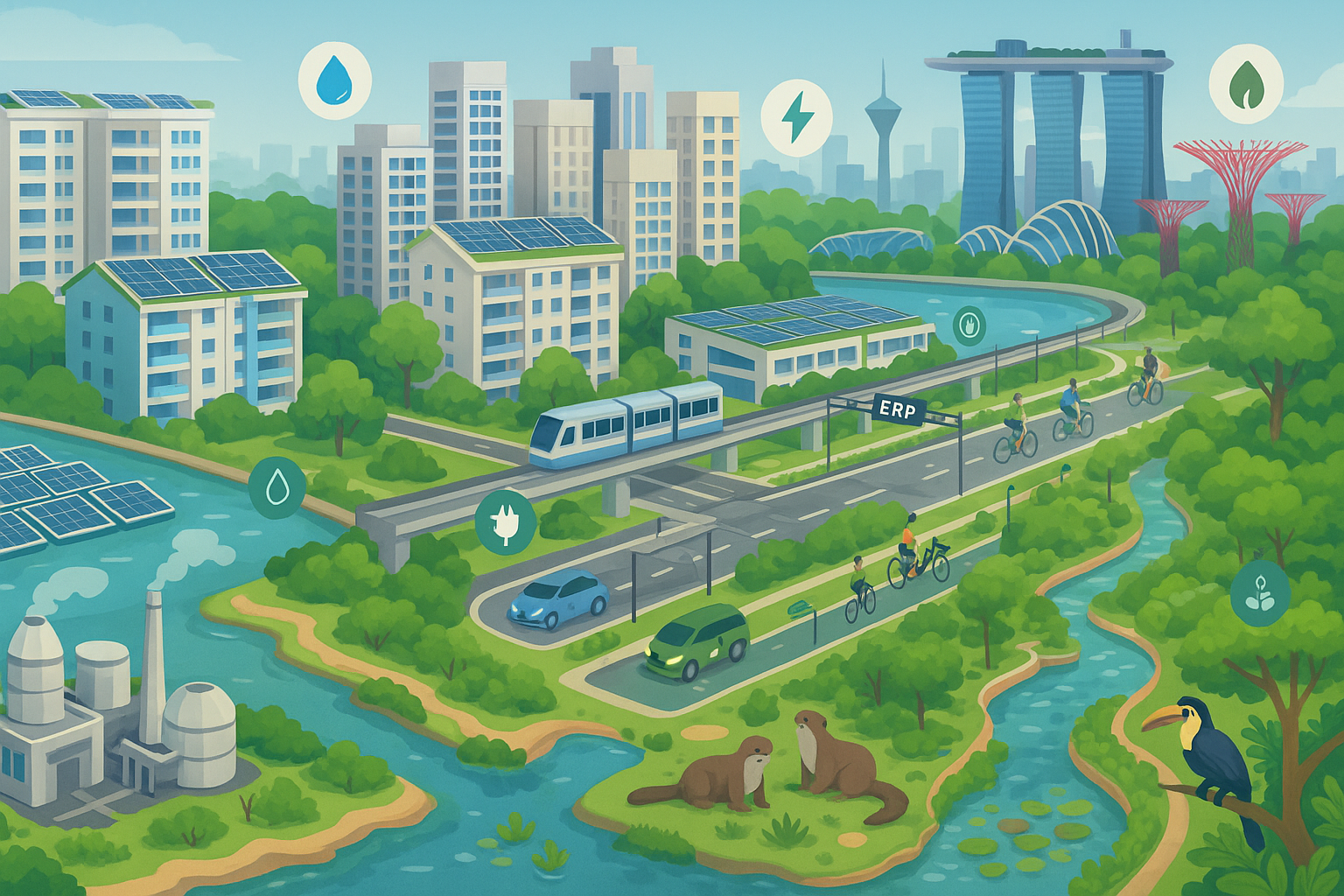
If climate resilience has a heartbeat in Singapore, it is water. The island’s scarcity of natural freshwater pushed engineers to knit together a diversified supply while reshaping the city’s relationship with rain. The Four National Taps strategy—local catchments, imported water, desalination, and NEWater—was built to be redundant by design. When monsoons falter or demand spikes, desalination plants and recycled water stabilize the grid; during wetter months, stormwater captured in reservoirs is polished and blended for use.
Beyond hardware, the ABC Waters Programme recasts drains and canals as civic landscapes. Bio‑retention swales, rain gardens, and wetlands slow storm surges, trap sediments, and cool microclimates. By embedding water into parks and promenades, the city reduces flood risk while drawing residents toward steeper water literacy: where rain falls, where it travels, and what it costs to keep clean.
Energy strategy is equally pragmatic. Lacking vast land for renewables, Singapore focuses on efficiency and innovation at the edges. Solar panels bloom on rooftops and float on reservoirs, while advanced metering and demand‑response shave peaks from the grid. At district scale, centralized cooling loops in Marina Bay and other precincts leverage economies of scale—lowering emissions and noise.
Transport policy trims both congestion and carbon. Electronic road pricing charges for scarce road space in real time, nudging commuters to Mass Rapid Transit lines and frequent buses. Vehicle quotas hold the fleet steady, while EV adoption is propelled by rebates and charging infrastructure. Meanwhile, Park Connector Networks and wider sidewalks invite trips on foot or cycle, knitting neighborhoods to blue‑green corridors that double as wildlife pathways.
Waste is treated as a resource stream. The Zero Waste Masterplan expands materials recovery and encourages producers to design out waste upstream. Co‑located facilities like Tuas Nexus blend water and waste engineering: organic matter becomes biogas, incineration heat becomes electricity, and by‑products are recovered where feasible. This integrated approach stretches the lifespan of the offshore Semakau Landfill and reduces the logistics footprint of separate plants.
Nature‑based solutions round out the picture. Ecological corridors bridge habitat islands, green roofs shade buildings, and native plantings support pollinators and birds. Coastal defenses are shifting from hard walls to hybrid systems that include mangroves and living shorelines where possible, absorbing waves while building sediment.
Underpinning these moves are policy levers: an escalating carbon tax, a clear Green Plan 2030, and a maturing green finance ecosystem that steers capital toward credible projects. The city also cultivates public buy‑in through citizen science, community gardens, and transparent data dashboards. The resulting model is not about perfection but about orchestration—aligning infrastructure, behavior, and markets to make sustainability ordinary.