Editor Team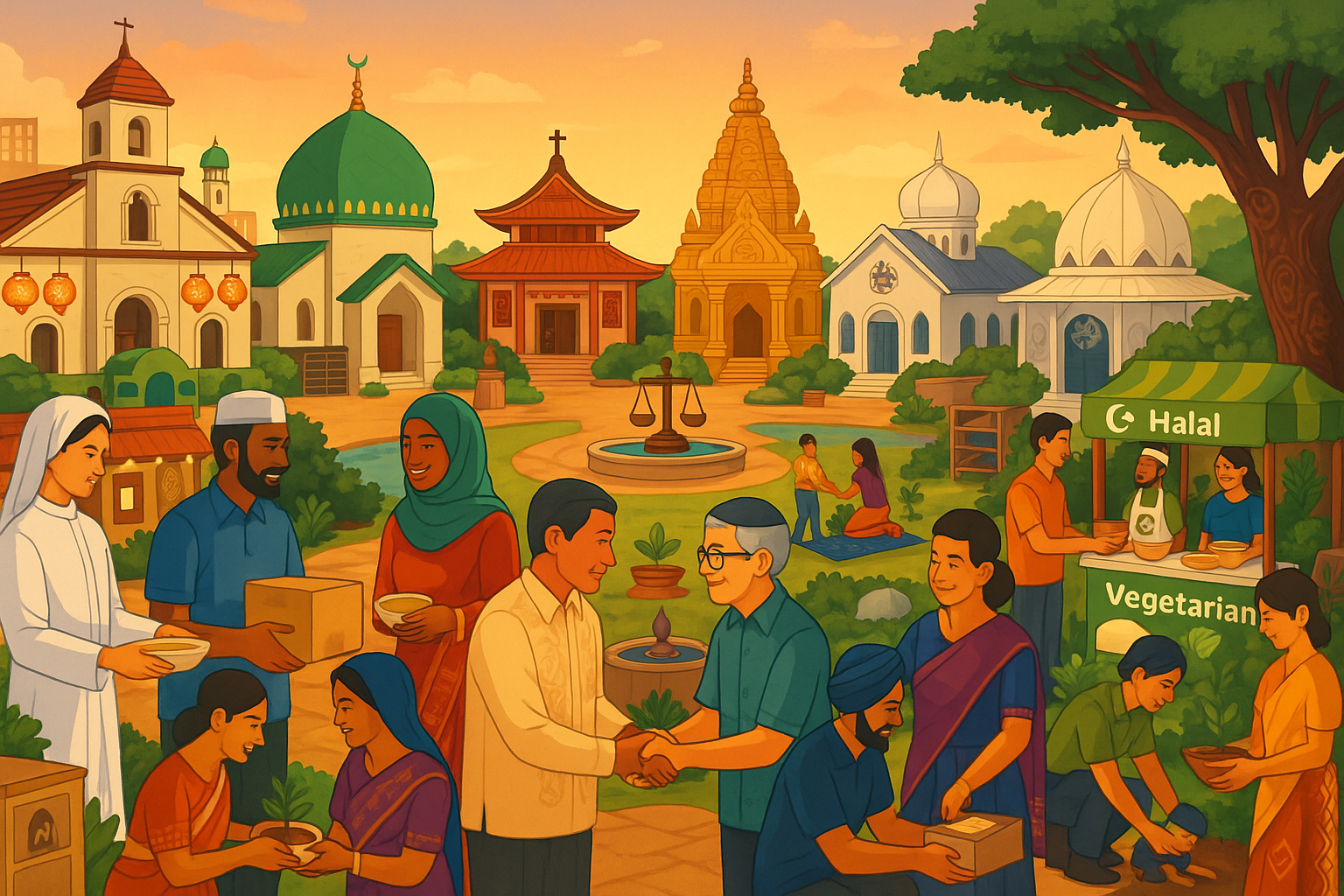
Step into a Filipino barangay on a Sunday morning and churches ring bells while sari‑sari stores restock rice and instant coffee. On Friday afternoons in Mindanao, shopfronts close early as men and women head to the mosque. In December, Simbang Gabi predawn Masses wind through neighborhoods; in the lunar months, Ramadan suhoor and iftar reshape sleep schedules and community kitchens. These overlapping calendars are a shorthand for the country’s religious diversity.
The Catholic majority remains culturally influential—parishes coordinate health drives, youth sports, and legal aid; images of Mary and local patrons crown fiestas that double as civic homecomings. Protestant congregations—Baptist, Methodist, Pentecostal, and the United Church of Christ in the Philippines—operate hospitals, universities, and radio stations, often emphasizing social services. Indigenous Christian bodies such as Iglesia ni Cristo and the Aglipayan Church organize worship with strong Filipino identity markers, from architecture to language.
Islamic life centers on community, law, and education. Jumu’ah prayers anchor the week, while halal certification supports entrepreneurs in food processing and tourism. Madrasah programs teach Arabic and Islamic values, some integrated into public schools. In BARMM, local governance aligns development planning with cultural norms around family, mediation, and customary leadership.
Smaller communities add texture: Chinese Buddhist temples hold Ullambana rites for ancestors; Sikhs maintain gurdwaras with langar open to all; Hindu groups celebrate Diwali in university auditoriums and mall atriums; a longstanding Jewish synagogue in Metro Manila hosts interfaith lectures. The Bahá’í community, active in neighborhood study circles, contributes to grassroots education and youth engagement.
Tolerance arises from habits of hospitality. Filipinos routinely accommodate dietary restrictions at potlucks—no pork dishes for Muslim guests, vegetarian options for Buddhists, halal or kosher‑style workarounds where possible. Intermarriage is common enough to normalize multi‑altar homes and dual holiday calendars. Public institutions recognize both Christian and Muslim feasts, and many local governments provide spaces for Islamic prayer during civic events.
Challenges remain. Prejudice against Moros and Lumad peoples, sometimes fueled by sensationalist crime reporting, lingers. Proselytizing can strain relationships when not conducted with sensitivity. Legal asymmetries—such as differences in family law for Muslims and the absence of civil divorce for most others—require careful navigation. Social media misinformation periodically inflames tensions.
Even so, civil society has developed tools for peace. Interreligious youth camps, university‑based dialogue centers, and joint environmental projects create shared purpose. After disasters, volunteer brigades form across confessional lines, reminding neighbors that solidarity often precedes theology. In this daily choreography, religious diversity is less an abstract principle and more an ordinary, practiced courtesy woven into Filipino life.