Editor Team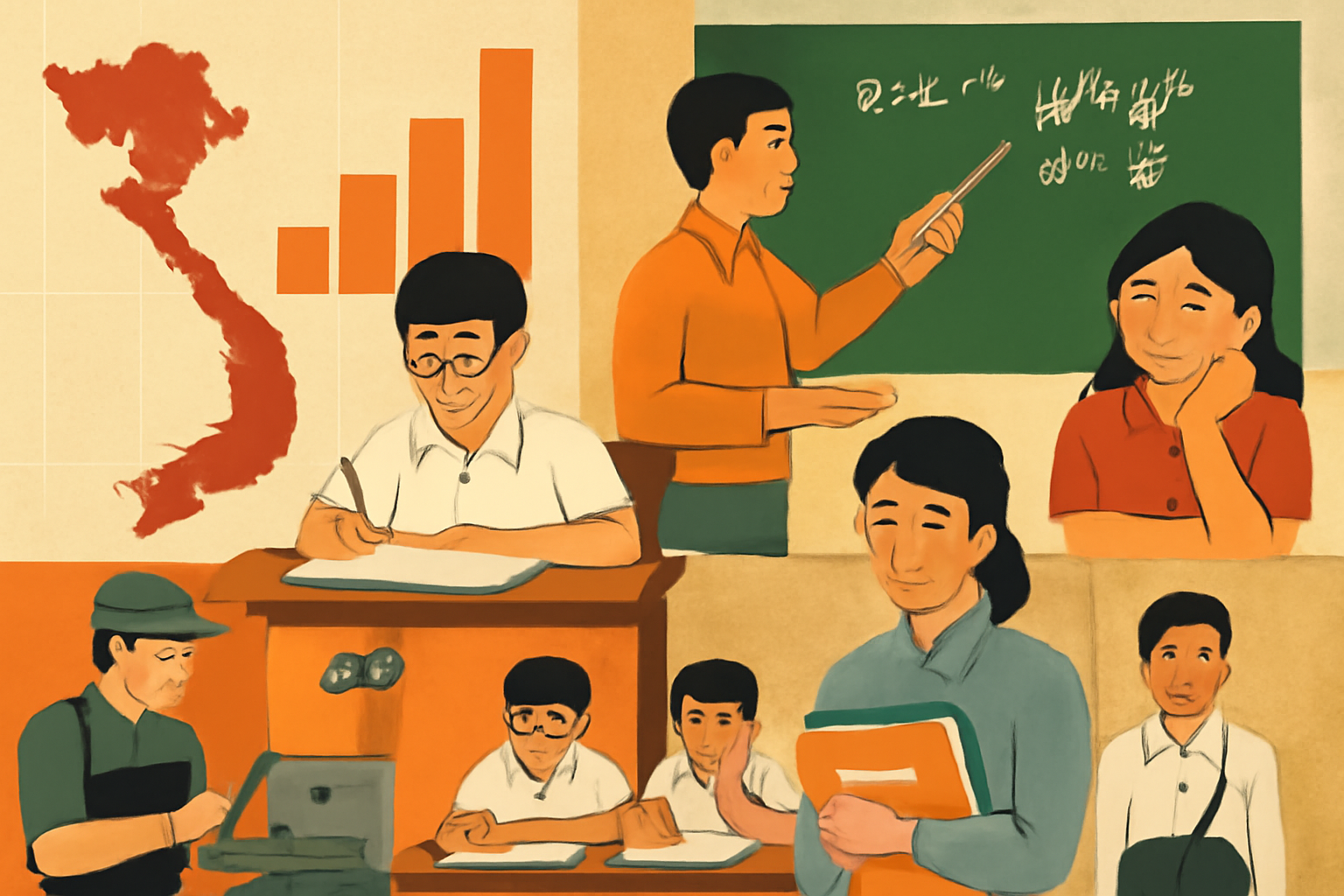
Over the last few decades, Vietnam has emerged as a leader in Southeast Asian education, largely due to its strong focus on improving the quality of education, increasing access to schooling, and achieving impressive results on global assessments. The nation’s education system has undergone significant transformations, but like any system, it faces several hurdles that need attention for continued progress.
Successes
One of the most notable successes of Vietnam’s education system is its near-universal literacy rate, which has been one of the highest in the region. The government’s dedication to making education accessible to all has paid off, with compulsory education laws ensuring that children receive at least nine years of schooling. This policy has had a profound impact on national development and poverty reduction.
Another success is the country’s impressive performance in international education rankings. Vietnam’s students consistently outperform their peers from other nations in PISA rankings, particularly in mathematics, science, and reading. This accomplishment is the result of a rigorous education system that places a strong emphasis on core academic subjects.
Vocational training has also been a key strength of the Vietnamese education system. The government has made substantial investments in vocational and technical education, providing students with skills that are directly applicable to the workforce. This approach has helped reduce youth unemployment and foster economic growth, as the nation’s industries are supported by a skilled labor force.
Issues
Despite the successes, Vietnam’s education system faces several challenges. One of the key issues is the predominance of rote memorization in the learning process. While this method has contributed to high scores on standardized tests, it has been criticized for not promoting creativity, critical thinking, or practical problem-solving skills. There is a growing call for reforms that will encourage more interactive and student-centered learning approaches.
Another pressing issue is the significant gap between urban and rural education quality. While students in major cities have access to better resources, qualified teachers, and modern learning materials, those in rural areas often struggle with inadequate infrastructure and limited support. This disparity has led to unequal educational outcomes, with rural students being at a disadvantage.
The shortage of well-trained teachers is another challenge. Despite the government’s efforts to increase the number of teachers, many schools still suffer from a lack of qualified educators. The insufficient focus on ongoing professional development for teachers means that many are ill-equipped to implement modern teaching techniques or handle diverse classrooms effectively.
Conclusion
Vietnam has made substantial progress in its education system, achieving impressive literacy rates and consistently high performance in international tests. However, the system still faces challenges, particularly in terms of teaching methods, educational equity, and teacher training. Addressing these issues will be crucial for the continued development of the country’s education system, ensuring that it remains relevant and competitive on the global stage.